Introduction
A US stock advisory service exists to answer one question: which US stocks deserve attention right now, and at what price? Many first-time subscribers expect more than that, and some expect less. Knowing the real scope helps you judge value before you pay, especially when you compare plans across providers.
What a US Stock Advisory Service Actually Does
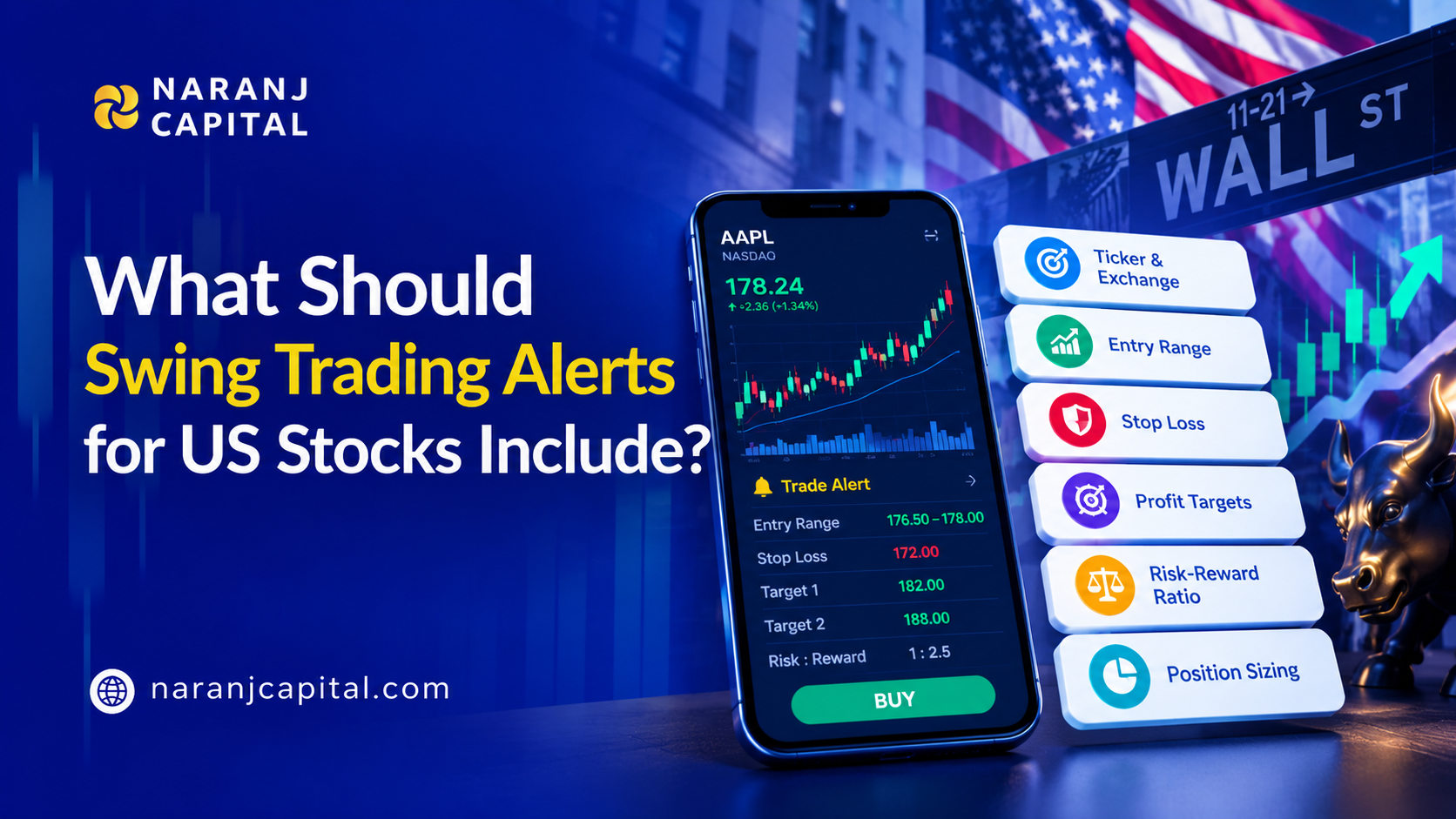
A good provider turns market research into trade ideas you can act on. The research covers financial statements, earnings growth and valuation measures such as P/E and P/B, plus chart signals like moving averages and volume. Each idea normally carries a buy range, a price target and a stop-loss, so you know where to enter, take profit and exit. Most explain the reasoning and send updates on open trades. At Naranj Capital, NYSE and NASDAQ ideas arrive on WhatsApp before the US session opens, with trade analysis available after login.
Where the Advisory Ends and Your Broker Begins
| Task | Advisory service | Your broker |
|---|---|---|
| Research and trade ideas | Yes | No |
| Entry range, target and stop-loss | Yes | No |
| Full financial planning | Rarely, ideas are general | No |
| Order execution (unless separately agreed) | No | Yes |
| Holding your cash and shares | No | Yes |
| Guaranteeing returns | No | No |
The last row matters most. Recommendations carry market risk, and past performance never ensures a positive return, so ask for the full trade record instead of a few chosen wins. You still need your own brokerage account, because ideas are not orders and your cash stays with your broker. Estate, tax and insurance questions also sit with other professionals. If you prefer shorter holds, swing trading alerts for US stocks typically run for a week or two. Position size and risk remain your call.
How to Judge a Provider Before You Subscribe
Four Quick Checks
- Credentials: named analysts with qualifications you can verify.
- Method: clear logic behind every idea.
- Transparency: a published trade record that includes losses.
- Independence: open disclosure of any commissions or partnerships.
- Risk disclosure: plain language and no guaranteed returns.
A provider that is open about losing trades and plain about risk disclosure deserves more trust than one that only shows winners. Also ask what registration or licence the firm holds, then verify it independently. Our guide to choosing a professional US stock trading advisory service walks through each check in more detail.
Is It the Right Fit for You?
If you want structured ideas without watching charts all day, a US stock advisory service can save time, provided you place the orders and manage the risk yourself. Naranj Capital offers plans from 15 to 180 trade ideas. Models differ, from research letters to robo-advisors and fully managed accounts. This article is educational and is not personalised advice. Investing involves risk of loss.
Frequently Asked Questions
1. What is a US stock advisory service, and how is it different from a stockbroker or brokerage account?
A US stock advisory service provides research-based trade ideas, usually with a buy range, target and stop-loss. A stockbroker or brokerage account executes your orders and holds your securities. The two are separate, so you follow the ideas and place the trades yourself through your broker.
2. How does a US stock market advisory subscription actually work (buy range, target, stop-loss, holding period)?
You pick a plan with a set number of trade ideas. Each idea arrives before the US session with an entry range, a target, a stop-loss and a typical holding period, followed by updates on open trades. You place the orders with your own broker. Returns are not guaranteed.
3. What are short-term US stock trading signals, and how should a trader judge their reliability?
Short-term signals are trade ideas meant to play out over days to a few weeks, each with an entry, target and stop-loss. Judge reliability by the full record including losses, the risk-reward ratio, consistency across many trades and clear risk language, not by a headline win rate.
4. Are paid/premium US stock recommendations worth it compared to free stock tips?
It depends on what you receive. Paid ideas can add structure, such as defined entries, targets, stop-losses and a published trade record. Free tips often lack that detail. Judge either one by transparency, credentials and risk disclosure rather than promised returns.
5. How often are NYSE and NASDAQ stock recommendations updated, and what do 'buy range,' 'target,' and 'stop-loss' mean?
Frequency depends on the provider. Naranj Capital's plans describe about two to three ideas a week. The buy range is the price zone for entry, the target is the price where profit is booked, and the stop-loss is the price at which you exit to limit the loss.
6. What makes a stock market advisor 'certified' in the US, and why does that credential matter for investors?
Certified usually means the analyst holds a recognised designation such as CMT or CFA, earned through exams and experience requirements. It signals tested knowledge, but it is not a guarantee of results. Verify any credential directly with the body that issues it.
7. What is swing trading, and how do swing trading alerts for US stocks work in practice?
Swing trading aims to capture price moves that last from a few days to several weeks. An alert gives you a stock, an entry range, a target and a stop-loss. You place a limit order with your broker, then manage the position against those levels.
8. What should you check before subscribing to a professional US stock trading advisory service (credentials, methodology, transparency, risk disclosure)?
Check for named analysts with verifiable credentials, a clear method behind each idea, a published trade record that includes losses, and plain risk disclosure. Also read the refund, pause and upgrade terms, and avoid any provider that guarantees profits.