Why Vetting a US Stock Advisory Matters
Selecting a professional US stock trading advisory service is one of the most critical decisions an investor can make when navigating the complex equities landscape of Wall Street. With thousands of stock tip channels, self-proclaimed gurus, and unverified social media signals flooding the internet, distinguishing genuine market expertise from high-risk marketing claims requires a rigorous, systematic evaluation. Whether you are trading from within the United States or investing internationally, aligning your capital with a professional US stock trading advisory service ensures your strategies are grounded in technical rigor, risk discipline, and regulatory awareness.
This comprehensive due-diligence checklist outlines the essential criteria every trader and long-term investor must evaluate before subscribing to an advisory platform.
Key Vetting Pillars for US Advisory Platforms
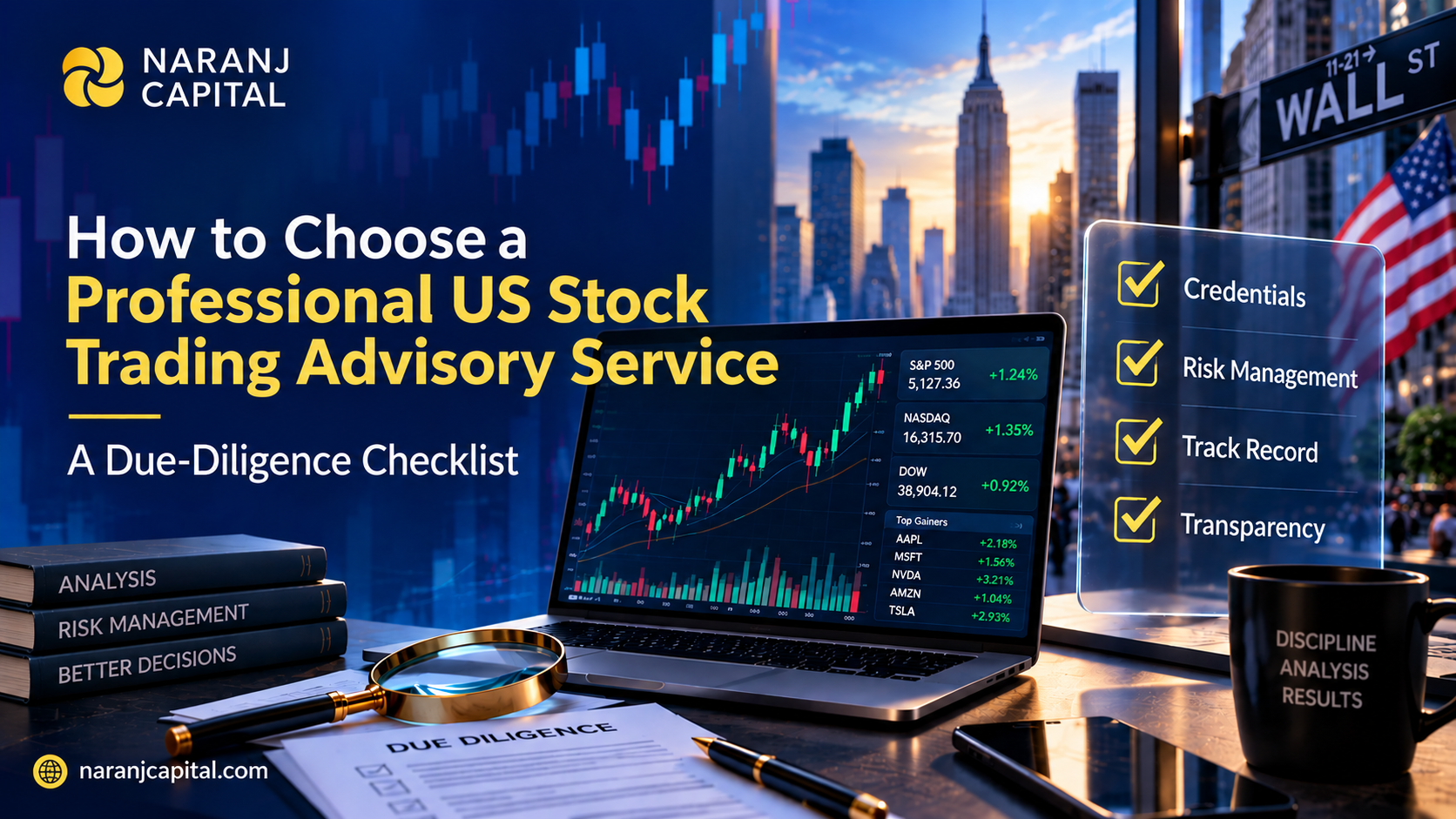
- Credentials Matter: Verify if research leads hold recognized designations like CMT or CFTe, ensuring institutional-grade market technical analysis.
- Risk Management Rigor: A reliable advisory clearly specifies explicit entry ranges, profit target levels, and strict stop-loss boundaries for every recommendation.
- Track Record Verification: Audit performance methodology for transparency, ensuring trade logs reflect real market liquidity rather than unrealistic backtested gains.
- Comprehensive Service: Choosing a professional US stock trading advisory service gives you direct access to research rather than automated retail broker execution.
Regulatory Transparency and Professional Credentials
The first step in vetting a professional US stock trading advisory service involves auditing the credentials of the analytical team behind the research. In the financial industry, professional designations demonstrate a verified commitment to standard ethics and rigorous technical knowledge.
When reviewing potential research partners, confirm whether their market strategists hold credentials such as the Chartered Market Technician (CMT) or Certified Financial Technician (CFTe) designations. Engaging a Certified US stock market advisor ensures that price action models, volume analysis, and sector rotation strategies follow established quantitative methodologies rather than emotional speculation.
Key Credential Questions to Ask
- Who leads the research team, and what is their verifiable industry track record?
- Does the advisory clearly publish its analytical framework and risk disclosures?
- Is the research team transparent about its independent operational structure?
Actionable Trade Execution Parameters
A legitimate professional US stock trading advisory service does not provide vague market commentary or ambiguous stock lists. Instead, high-conviction research delivers complete trade parameters that allow investors to execute positions efficiently.
Every trade recommendation must include four non-negotiable execution metrics:
- Precise Buy Range: An entry corridor that accounts for current order book liquidity.
- Target Price Levels: Objective profit points based on structural technical resistance.
- Strict Stop-Loss Boundaries: Predetermined exit points designed to preserve capital if market direction shifts.
- Holding Duration: Estimated time horizons ranging from short-term swing setups to multi-month position trades.
Without these structured parameters, a platform functions merely as a speculative commentary feed rather than a true professional US stock trading advisory service.
Evaluating Advisory Service Models: Self-Directed vs. Professional Guidance
Understanding how structured guidance compares to unverified retail tips is essential for long-term capital preservation. The comparison table below highlights key operational differences.
| Evaluation Metric | Unverified Tips / Retail Channels | professional US stock trading advisory service |
|---|---|---|
| Analytical Foundation | Social media hype & speculative momentum | CMT/CFTe technical analysis & macroeconomic trends |
| Risk Management | Vague or non-existent exit guidelines | Mandatory stop-loss, buy ranges & target levels |
| Track Record Verification | Selective wins & erased trade history | Full historical log accounting for wins and losses |
| Market Mechanics | Ignores slippage & liquidity constraints | Tailored to market execution realities |
| Regulatory Compliance | Unregistered & anonymous creators | Transparent advisory standards & clear disclosures |
Subscribing to a reliable US stock advisory service provides investors with structured risk controls, eliminating guesswork during volatile trading sessions.
Methodology Transparency and Performance Auditing
Evaluating past performance requires understanding how trade results are calculated. A high-performing professional US stock trading advisory service maintains transparent track records that reflect realistic market conditions.
Beware of services that market hypothetical gains based on perfect fill prices at absolute daily lows. Professional research platforms factor bid-ask spreads, normal order slippage, and realistic execution timeframes into their reported historical metrics.
Subscribing to premium US stock recommendations ensures you receive real-time updates when market dynamics require adjusting target prices or trailing stop levels.
Alignment with Exchange Mechanics (NYSE vs. NASDAQ)
American equity markets are split across distinct exchange architectures. The New York Stock Exchange relies on auction systems with Designated Market Makers, whereas NASDAQ operates as an electronic dealer network. A top-tier professional US stock trading advisory service adjusts its execution protocols based on these underlying market models.
For example, high-beta tech equities listed on NASDAQ require dynamic trailing stops to handle sudden momentum swings, while NYSE value equities require strategic position-building within defined consolidation zones.
Final Checklist: 5 Steps Before You Subscribe
Before committing your capital to any external research platform, complete this final verification sweep:
- Verify Credential Claims: Check for recognized technical certifications among lead strategists.
- Inspect Trade Alerts: Ensure trade alerts contain explicit buy, target, and stop-loss boundaries.
- Review Historical Logs: Confirm the platform publishes comprehensive loss records along with winning setups.
- Evaluate Exchange Strategies: Confirm the advisory tailors execution rules for both NYSE and NASDAQ equities.
- Test Support Channels: Ensure the service offers responsive customer support and clear platform documentation.
Choosing a professional US stock trading advisory service requires thorough due diligence, but the reward is a disciplined, repeatable framework for Wall Street investing.
- Explore global access guidelines in our US stock advisory for international investors
- Compare exchange execution models in our NYSE and NASDAQ stock advisory
- Learn about signal mechanics through our short term US stock trading signals resource archive.
- Review active strategy options on our US stock market advisory subscription platform page.
Frequently Asked Questions
1. What should I check before subscribing to a professional US stock trading advisory service?
You should verify analyst credentials (such as CMT or CFTe designations), examine whether trade alerts include explicit buy ranges and stop-loss boundaries, audit historical track record transparency, and ensure risk management policies are clearly disclosed.
2. What makes a stock market advisor certified in the US?
A stock market advisor is considered certified when they hold accredited professional designations like Chartered Market Technician (CMT) or Certified Financial Technician (CFTe), demonstrating mastery of technical analysis, risk management, and ethical standards.
3. How does a professional US stock trading advisory service handle risk management? Professional advisories enforce strict risk controls by assigning predetermined stop-loss levels, calculating position sizing based on portfolio risk tolerance, and setting realistic profit target corridors for every recommended trade.
4. Are paid stock advisory services better than free stock tips?
Yes, paid advisory platforms invest in institutional-grade research, professional technical analysis tools, and experienced analysts. Free stock tips often lack risk parameters, accountability, and track record verification.
5. Can international investors subscribe to a US stock trading advisory service?
Yes, non-US residents can subscribe to American advisory services to receive global market signals, provided they trade through international brokerages compliant with US equity market access rules.
6. What is the difference between a stockbroker and an advisory service?
A stockbroker provides the technological platform to execute buy and sell orders in the market, whereas a stock advisory service provides market research, timing signals, and strategic portfolio guidance.
7. How often should a professional advisory service send trading updates?
Trading updates should be sent in real time whenever market conditions trigger buy ranges, profit target levels, stop-loss adjustments, or structural changes in recommended stock positions.
8. Do advisory services guarantee trading profits?
No, legitimate advisory services never guarantee profits because equity markets carry inherent risks. Instead, professional services focus on probability-based strategies, disciplined risk-reward ratios, and capital preservation.