Introduction
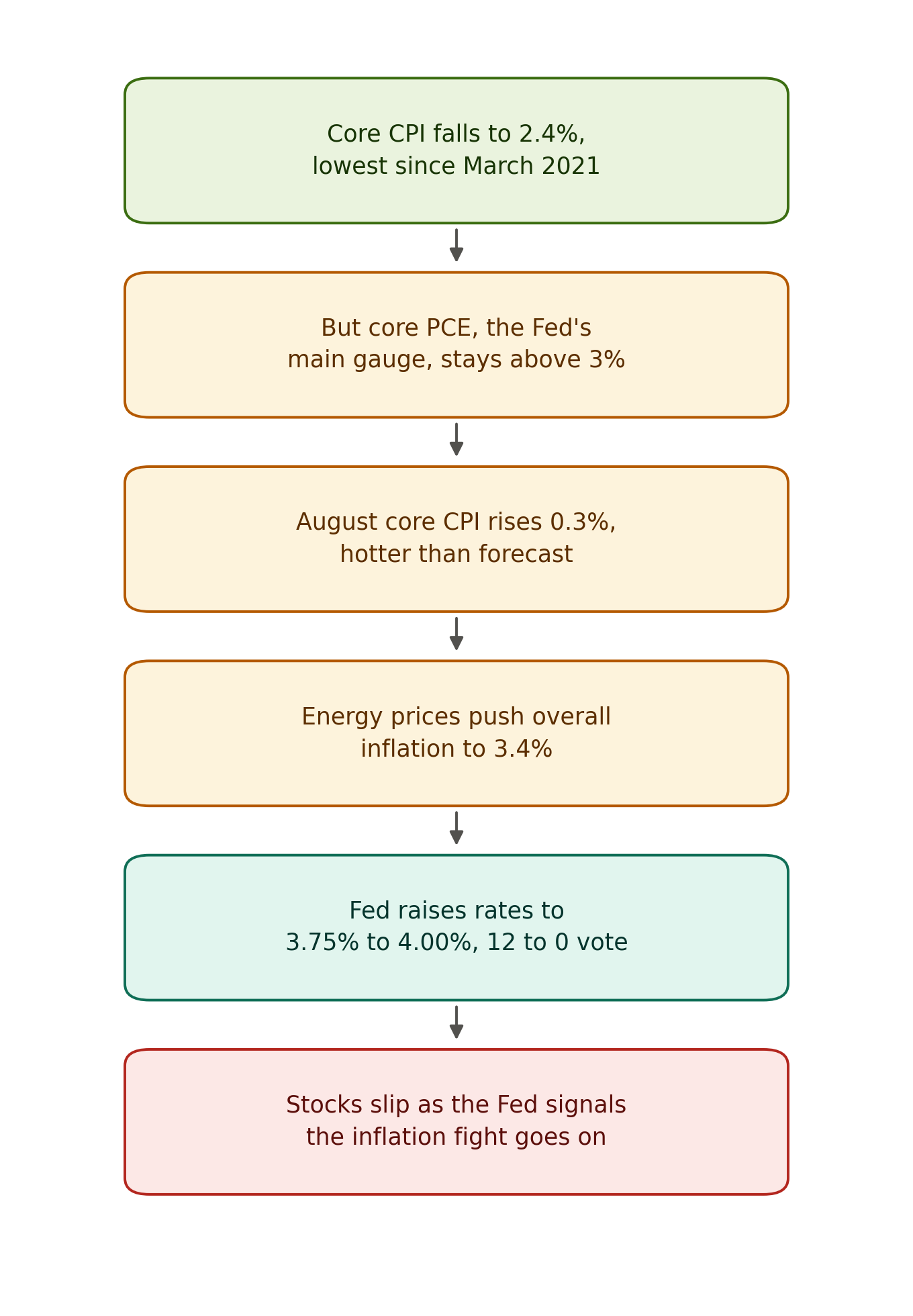
On September 11, 2026, the government reported that core inflation had fallen to 2.4%, its lowest level since March 2021. Five days later, the Federal Reserve raised interest rates for the first time in three years.
That sounds backwards. If inflation is cooling, why tighten? The answer is in the details, and it matters for your stocks.
For investors using trading advisory services for US stocks, understanding the connection between inflation, interest rates, and market sentiment is essential. Fed decisions can influence stock valuations, sector performance, and trading opportunities across the US market.
The Two Facts That Seem to Clash
Fact one: Core CPI, which leaves out food and energy prices, rose 2.4% in the 12 months through August. That's the lowest reading in about five and a half years.
Fact two: On September 16, the Fed raised its key interest rate by 0.25 percentage points, to a range of 3.75% to 4.00%. Every voting member agreed, a 12 to 0 vote. It was the first hike since 2023.
Both are true. Here's how.
Reason One: There Are Two Core Inflation Gauges
Think of two thermometers in the same room that show different temperatures. Both are working. They just measure things a little differently.
| Factor | Core CPI | Core PCE |
|---|---|---|
| Published by | Bureau of Labor Statistics | Bureau of Economic Analysis |
| Who watches it most | News headlines and households | The Federal Reserve |
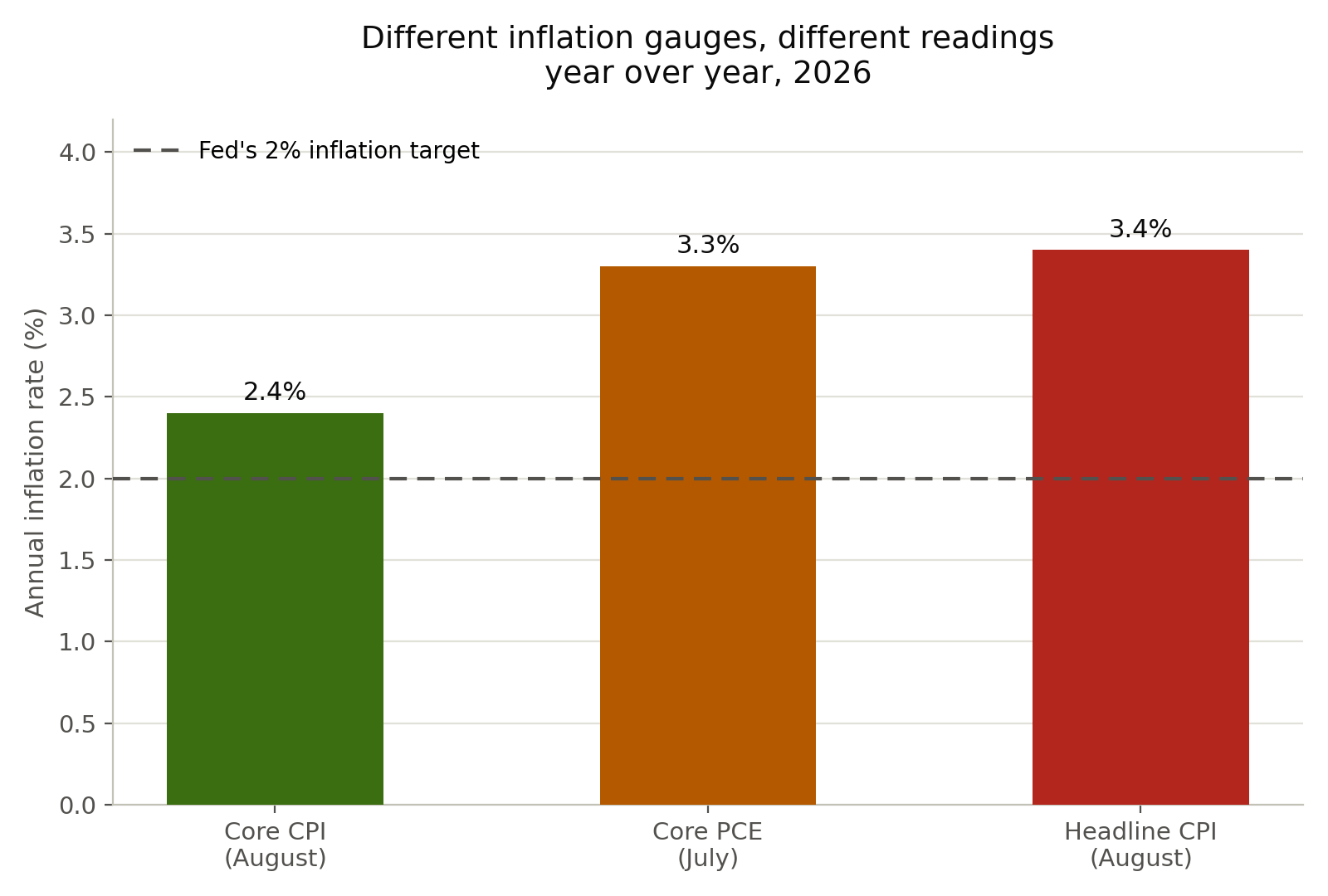
| Reading before the Fed meeting | 2.4% (August) | 3.3% (July) |
The Fed's 2% inflation goal is set in terms of PCE, not CPI. And core PCE has been running above 3% every month this year, according to J.P. Morgan's economists. Core CPI normally runs above core PCE, so this gap is unusual.
So while the headline-friendly number looked great, the Fed's own yardstick was still more than a full percentage point above its target.
Reason Two: The Latest Month Ran Hot
The yearly number looks back over 12 months. The Fed also watches the most recent trend.
In August, core CPI rose 0.3% from July. Economists had expected 0.2%. So even as the yearly rate edged down, the newest monthly reading came in hotter than forecast.
Reason Three: Energy Prices Keep Pushing Prices Up
Core inflation leaves out energy. But families still buy gas. Overall CPI inflation was 3.4% in August, and gasoline prices rose 3.9% in that one month, with the US-Iran war keeping energy markets on edge.
Fed Chair Kevin Warsh described the hike as a way to keep price increases from spreading much further beyond energy. In plain terms, the worry is that costly fuel slowly seeps into everything else, from shipping to groceries to services, and turns a short spike into a lasting habit.
Reason Four: The Economy Can Take It
Warsh said the economy appears to be strengthening, and the Fed's own projections have unemployment around 4.1%. A solid job market gives the Fed more room to raise rates without worrying as much about causing layoffs.
How Stocks Reacted
The hike itself was no surprise. Markets had priced in better than 90% odds of it.
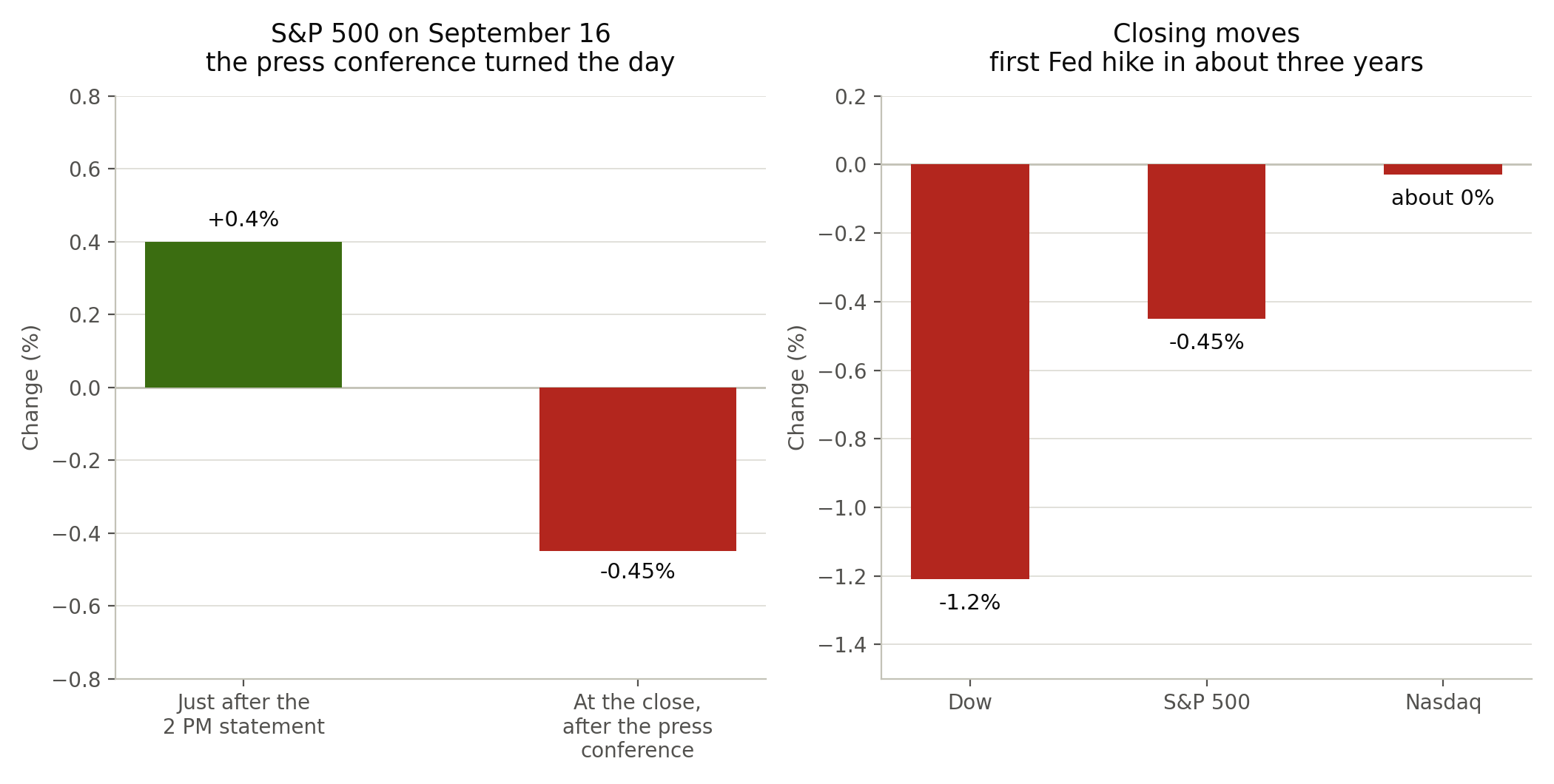
Stocks even rose about 0.4% right after the 2 PM announcement. Then Warsh held his press conference. He said inflation "is too high and has been for too long," and investors heard a signal that more hikes could follow.
By the close, the S&P 500 had fallen 0.45% to 7,551.81. The Dow dropped 631 points, or 1.2%, and the Nasdaq finished roughly flat. The Fed's projections show one more hike this year, and traders put the odds of a second additional hike at around 40%.
What History Says About First Hikes
UBS studied 16 hiking cycles since 1954. It found the S&P 500 gained an average of 10.8% in the year after the first hike.
That's not a promise. Every cycle is different, and this one comes with energy-driven inflation and a war in the background. But it's a useful reminder that the first hike alone has rarely decided where stocks go next. Earnings, growth, and inflation matter more.
What This Means for Investors
-
Both headlines were true at once. Core inflation at a five-year low and a rate hike aren't a contradiction once you know which gauge is being quoted.
-
Check which inflation number a headline uses. The Fed watches core PCE, while most news reports lead with CPI.
-
Keep an eye on energy prices, the next CPI report due October 14, and what Fed officials say next. Those will shape whether more hikes come.
-
Remember that higher rates cut both ways. They can weigh on stock valuations, but they also mean better yields on savings and bonds.
-
Stick to a diversified, long-term plan instead of reacting to a single meeting. For those following positional trading in USA stocks, monitoring interest rate expectations, price trends, and company earnings can help identify opportunities while managing downside risk.
This article is for education only and isn't personalized investment advice.
Conclusion
Think of the Fed as a driver who steers by looking through the windshield, not the rear-view mirror. The yearly core CPI number shows where inflation has been. The Fed is steering toward where it thinks inflation is headed.
Right now, that road still has energy-price bumps and a stubborn gauge that sits above 3%. That's why a five-year low in one number didn't stop a rate hike.