Introduction
On September 4, 2026, the government reported that US employers added 162,000 jobs in August. That's three times more than the 55,000 economists expected. Normally, that sounds like great news.
Stocks fell anyway. The Dow dropped more than 260 points that day. Here's why good news like this can actually spook the market, explained simply. Understanding this relationship is also important for anyone involved in short term trading in USA stocks, where changes in interest-rate expectations can quickly move prices.
The Paradox, Explained Simply
Most of the time, a strong jobs report is good for stocks. More people working usually means more spending, more business, and stronger company profits.
But sometimes, a strong jobs report does the opposite. It makes investors worried the Federal Reserve might raise interest rates, or hold them higher for longer than expected. And higher interest rates are bad for stock prices. This is often called the "good news is bad news" problem.
How Jobs Data Connects to Interest Rates
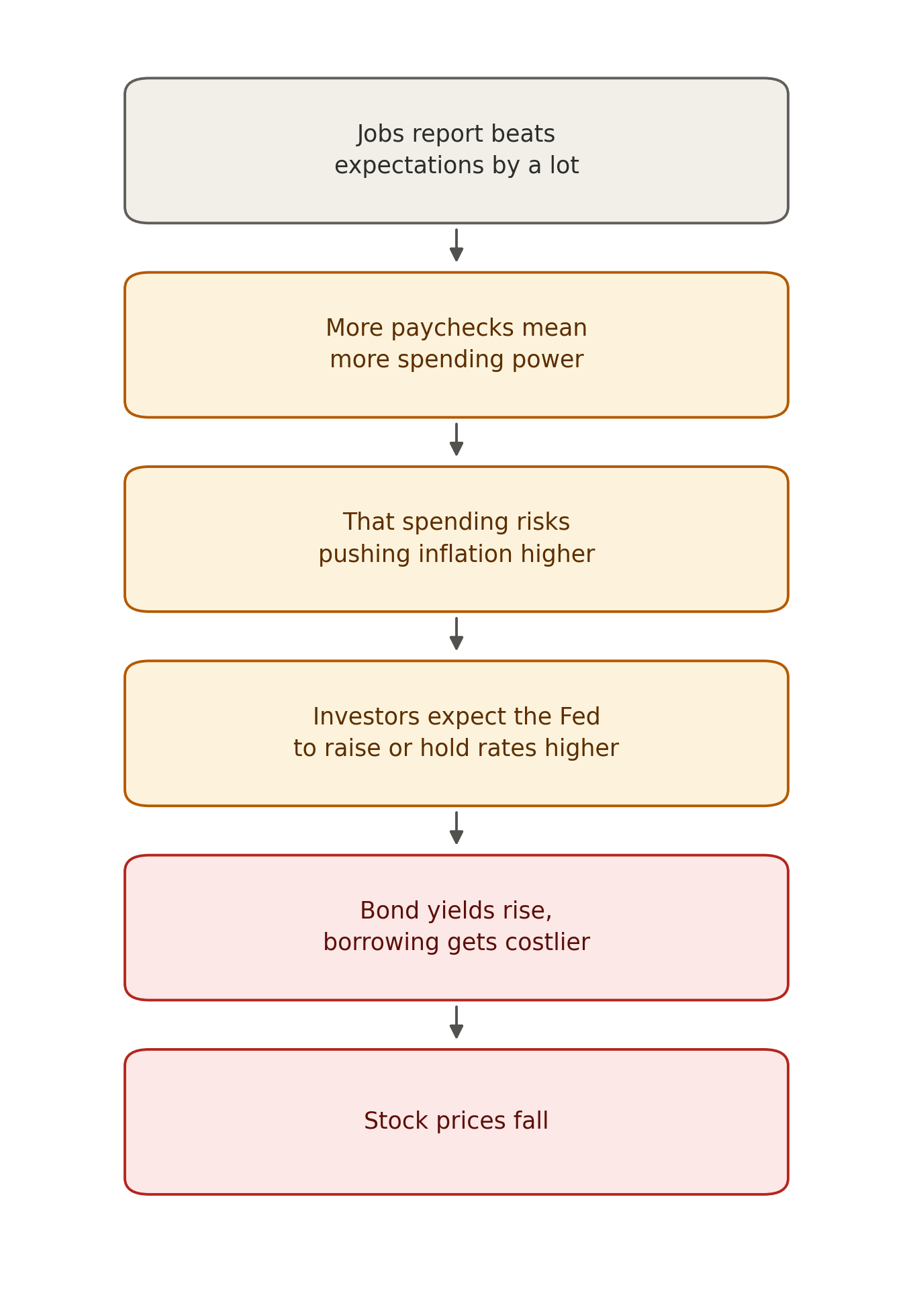
Here's the simple chain of events.
When lots of new jobs get added, more people are earning paychecks. More people with paychecks tend to spend more money. More spending can push prices higher. That's inflation, and the Fed's main job is keeping inflation under control.
So when jobs data comes in much stronger than expected, it can be read as a sign the economy doesn't need help. It might even need the opposite: higher interest rates, to cool things down and keep prices from rising too fast.
Why Higher Rates Hurt Stocks
Higher interest rates affect stocks in a few ways.
Borrowing money gets more expensive for companies, which can squeeze their profits. Safer options, like bonds and savings accounts, start paying more, which makes them more competitive with stocks. And when investors calculate what a company's future profits are worth today, higher rates make those future profits worth less in today's dollars. That hits fast-growing companies, the ones whose value depends heavily on profits far in the future, especially hard.
The September 2026 Example, Step by Step
Let's walk through exactly what happened.
Economists expected 55,000 new jobs in August 2026. The actual number came in at 162,000, a massive beat. The unemployment rate held steady at 4.1%.
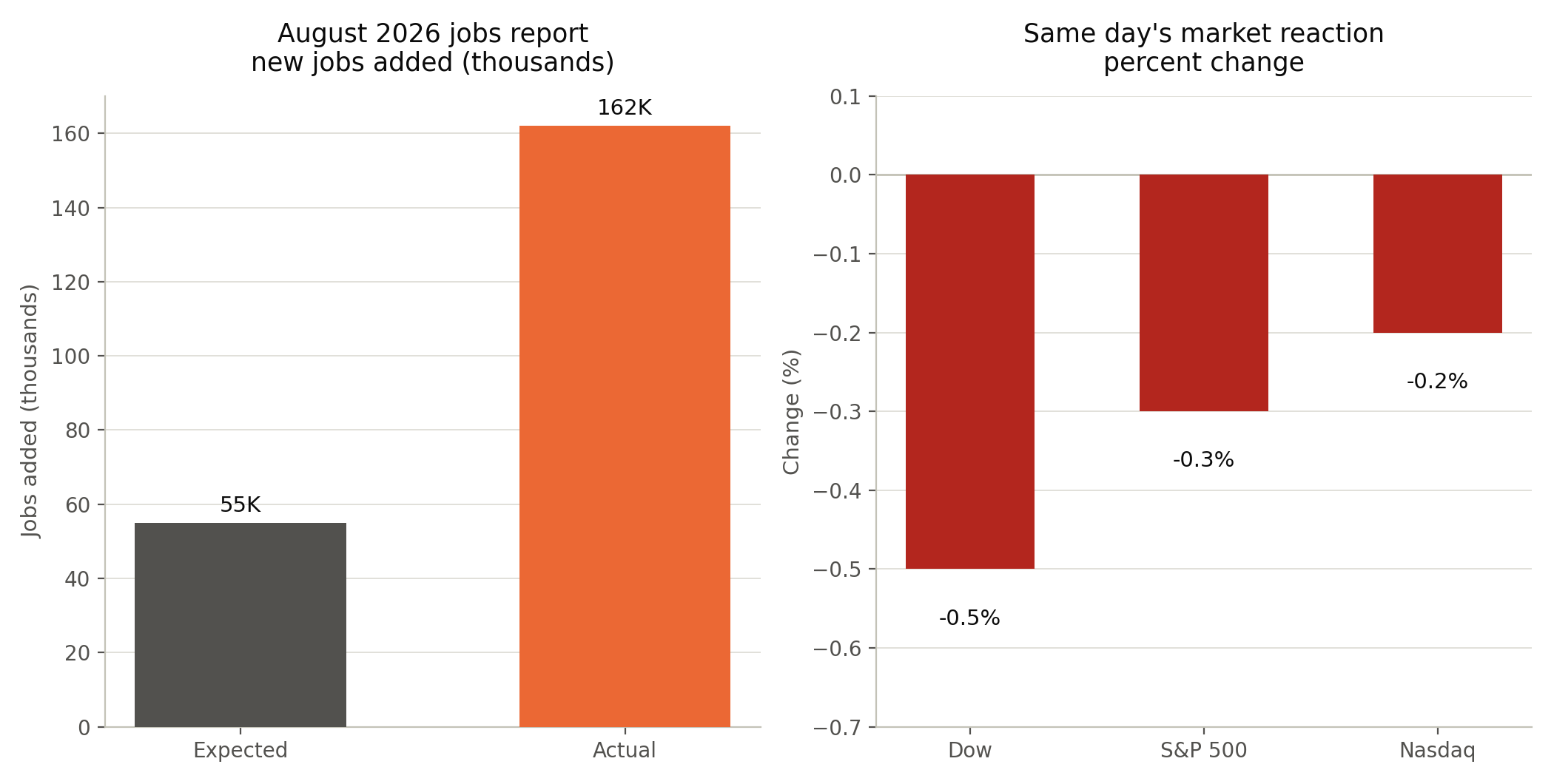
Bond investors reacted first. The yield on the 10-year Treasury bond climbed to 4.78%, as investors priced in a greater chance the Fed would need to act. By the end of the day, futures markets showed investors pricing in better than even odds of an actual rate hike at the Fed's next meeting, not just a pause in rate cuts, but a genuine hike. Stocks fell across the board: the Dow, the S&P 500, and the Nasdaq all closed lower.
When Is Good News Actually Good News?
This pattern isn't permanent. It only shows up when the Fed is actively worried about inflation running too hot.
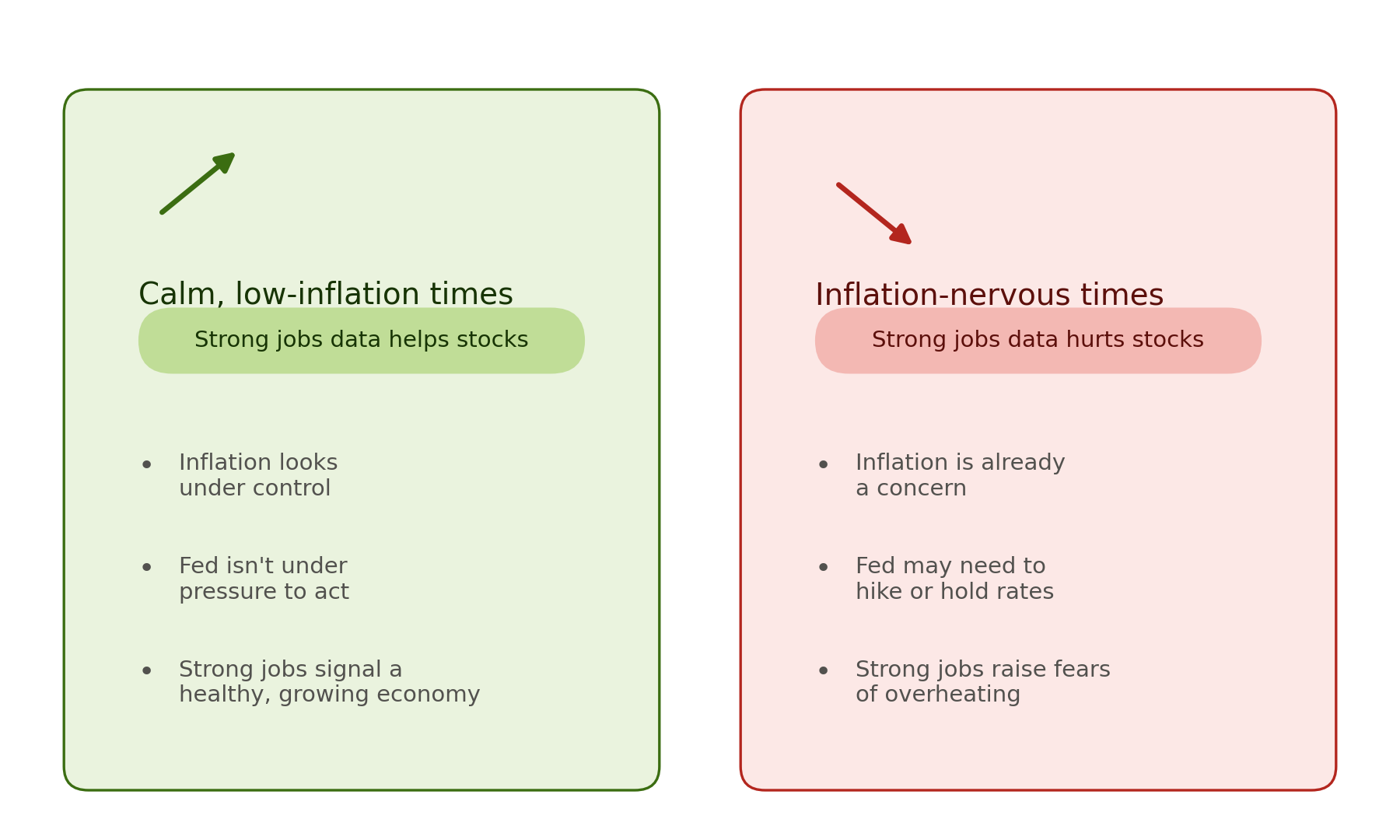
In calmer times, when inflation looks under control and interest rates aren't a big worry, a strong jobs report usually does what you'd expect: it lifts stocks, because it signals a healthy, growing economy. The "good news is bad news" effect shows up specifically when the market is nervous that strong growth might force the Fed's hand.
What This Means for Investors
- One data point rarely tells the whole story. A single jobs report, however surprising, is only one input into what the Fed ultimately decides to do.
- Watch bond yields alongside stock prices. A jump in Treasury yields right after a jobs report is often the clearest signal that rate expectations are shifting.
- Don't assume a market drop means something is wrong with the economy. Sometimes stocks fall precisely because the economy looks too strong, not too weak.
- Avoid overreacting to any single news day. These rate-expectation swings can reverse quickly once more data comes in.
For traders and investors looking for positional trading ideas in USA stocks, the key is to look beyond the headline and understand how economic data, Treasury yields, Fed expectations, and individual stock setups are interacting.
Conclusion
It feels backwards: more Americans getting hired, and stocks falling because of it. But markets aren't just grading the economy's report card. They're trying to guess what the Fed will do next, and sometimes a gold star on that report card is exactly what makes investors nervous.
Good news is still good news for the economy. For stocks, in moments like this, it depends entirely on what the Fed decides to do with it.