Introduction
A stock falls 20% in a week.
Somewhere on social media, someone is celebrating. They made money while everyone else was losing.
You are confused. Maybe a little annoyed.
How is that even possible?
The answer is short selling.
Most investors have heard the term. Very few understand it. And almost everyone is at least a little scared of it.
This guide will change that. We will break it down completely. What it is. How it works. Why people fear it. And what you actually need to know.
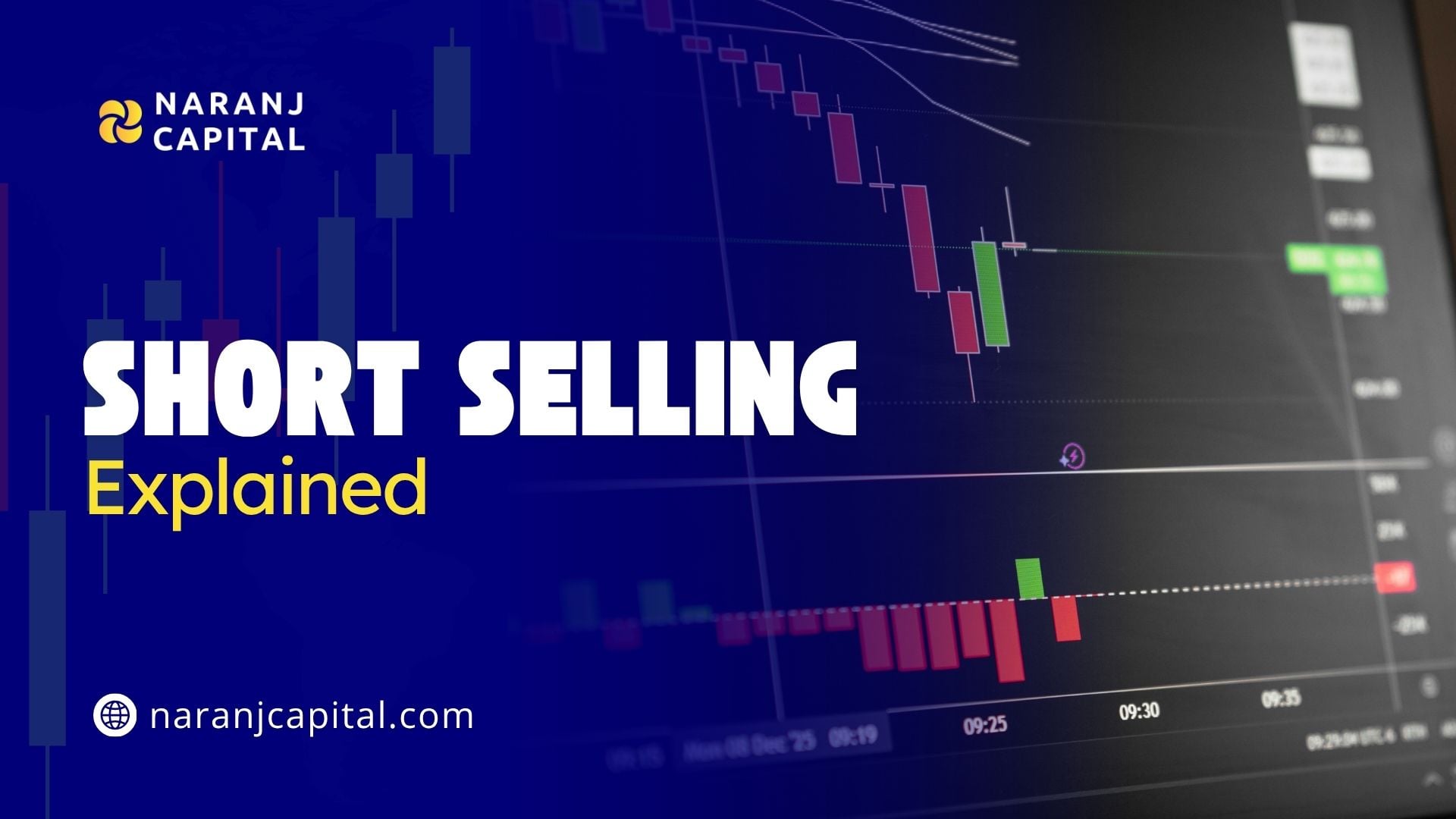
What is short selling?
Normally, you buy first and sell later. Simple.
Short selling flips that order.
You sell first. Then you buy later.
Here is how it works in practice:
You borrow shares you do not own. You sell them at today's price. You wait for the price to fall. When it does, you buy them back at the cheaper price. You return the shares to the lender. The difference is your profit.
Short selling: step by step
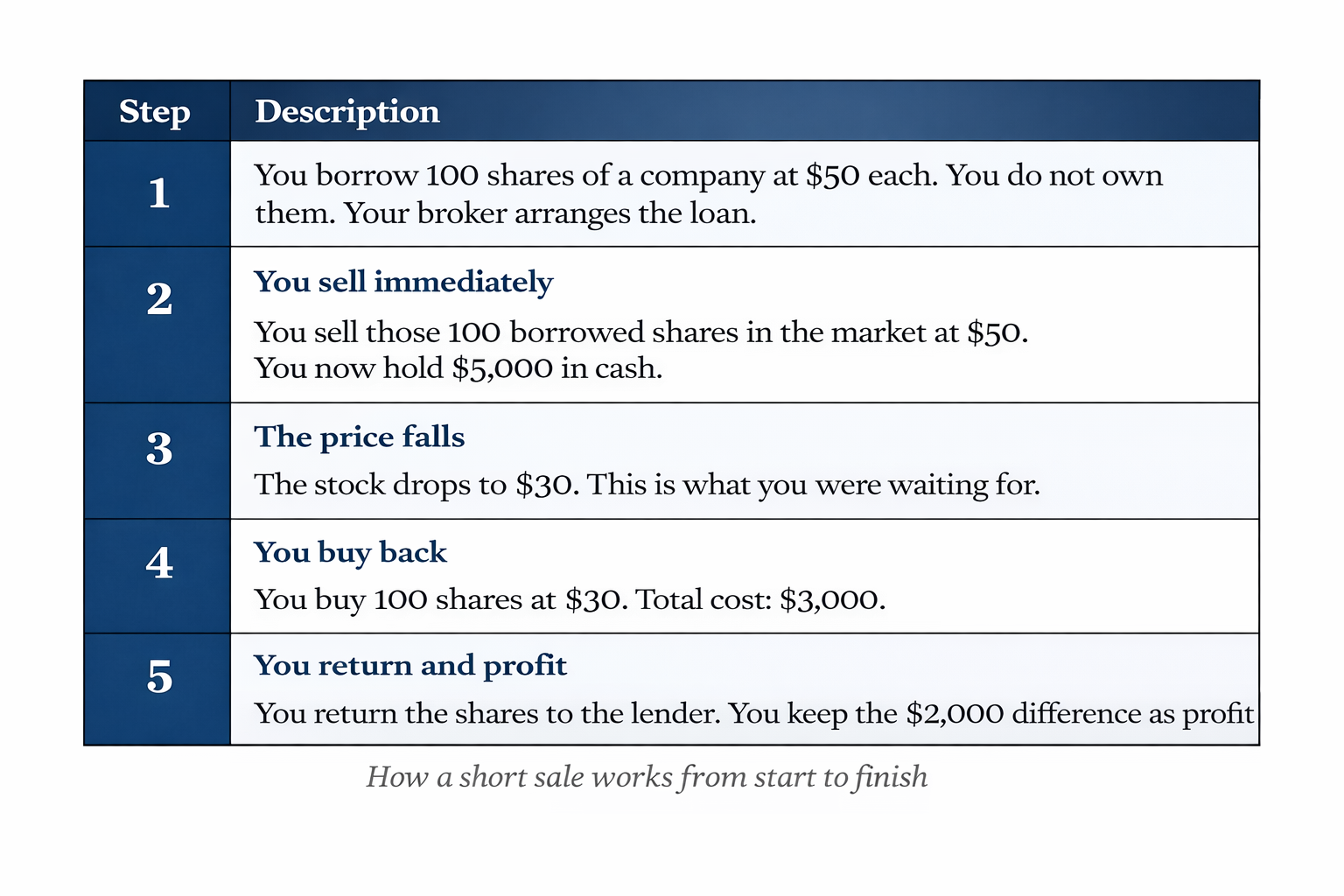
That is it. You made money because the price went down, not up.
In the US, short selling is legal and regulated by the SEC. Your broker arranges the share-borrowing in the background. Most major brokers allow it through margin accounts. This is why many traders include it as part of their US trading and investment advice, especially for volatile markets.
One important rule (Uptick Rule): you can only short a stock after its price has ticked up slightly. This rule was designed to stop short sellers from piling on a stock that is already crashing.
Short selling vs buying a stock: what is the real difference?
Before we get to the risks, it helps to see both strategies side by side.
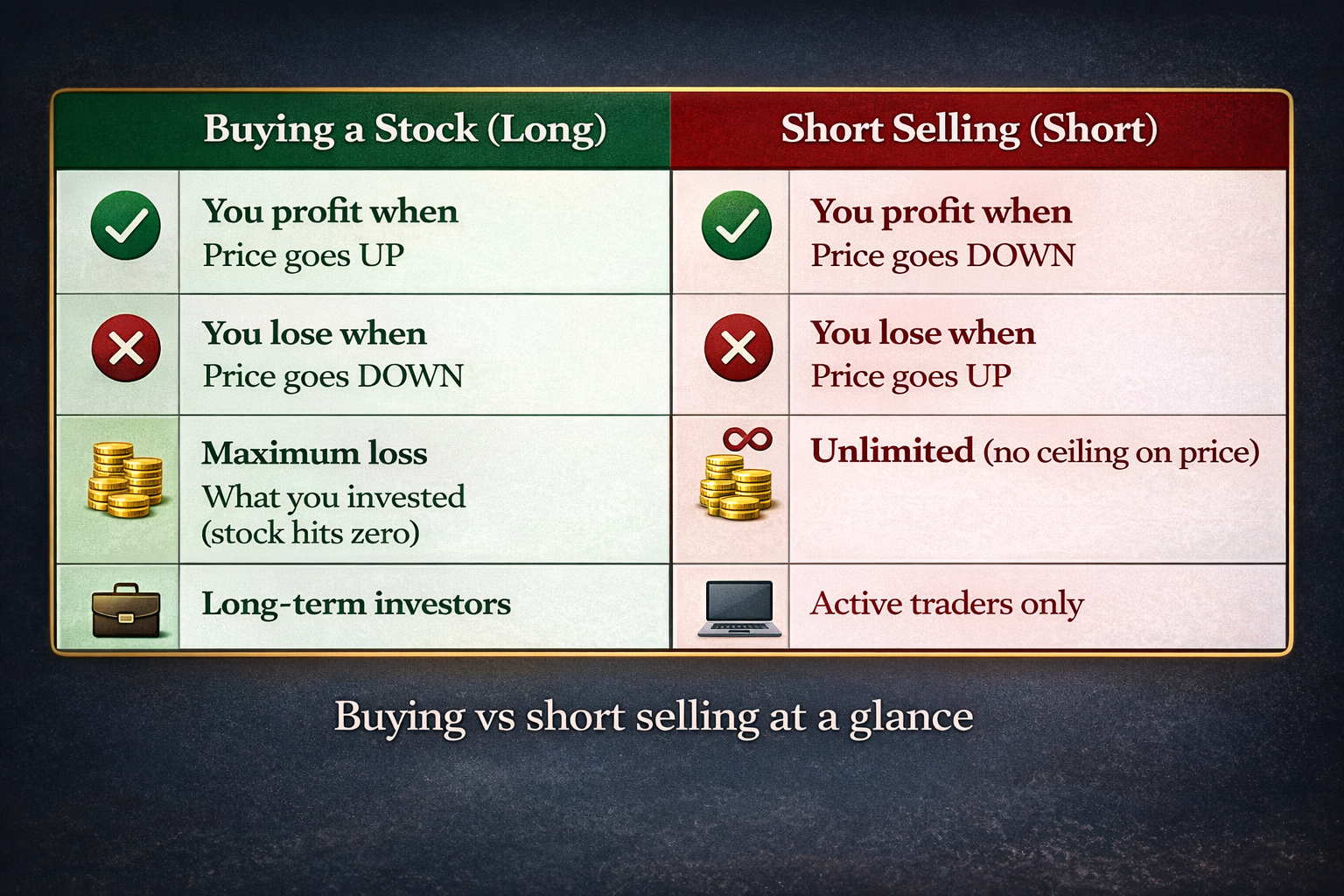
The key line in that table is maximum loss.
When you buy a stock, the worst that can happen is the stock goes to zero. You lose what you put in. That is your limit.
When you short a stock, there is no limit to how high the price can rise. Every dollar it goes up is a dollar you lose.
That is why short selling scares people. The fear is real. The risk is real.
The risks you must understand before touching short selling
- Unlimited losses. A stock you buy can fall to zero. A stock you short can keep rising forever. If you short at $50 and it hits $200, you are sitting on a $150 loss per share.
- The short squeeze. When too many people short the same stock, even a small piece of good news can trigger panic. Everyone rushes to buy back at once. This drives the price up fast and violently, crushing short sellers. GameStop in 2021 is the most famous recent example of this.
- Borrowing costs eat into profits. Borrowed shares are not free. You pay a daily fee while you wait for the price to fall. On popular short targets, this fee can be very high. Waiting too long can wipe out your profit.
- Naked short selling is illegal. You must actually borrow the shares before selling them. Selling shares you have not borrowed is called naked short selling and it is banned in the US. The rules apply to retail traders too, not just institutions.
The investors who got rich by betting against companies
Short sellers have a complicated reputation. Sometimes they are seen as villains. Sometimes as heroes.
Here are three real cases that show why.
- Jim Chanos (Enron)
He noticed issues in Enron’s financials before others did and made money when the company collapsed. - Michael Burry (2008 crash)
He bet against the housing market before the financial crisis and earned huge profits. - Silicon Valley Bank (2023)
Some investors warned about risks before the bank failed and benefited from its fall.
This is the real picture.
When short sellers are right, they expose fraud and bring price discipline to markets. Research firms like Hindenburg Research and Muddy Waters have published detailed short reports that later proved accurate.
When they are wrong, they look like people betting against good companies.
The truth is somewhere in the middle. Short selling, done by experienced professionals, can actually make markets more honest.
Should you use short selling as a retail investor?
Let's be direct.
If you are a long-term investor in index funds or dividend stocks, you do not need to short sell. Your strategy is built on time and compounding, not on predicting short-term drops.
But if you are an active trader, understanding short selling still matters even if you never use it.
In fact, many short-term trading tips on US stocks often include understanding downside moves, not just chasing upside momentum.
Markets fall much faster than they rise. A rally that takes two years to build can unravel in two months. Understanding short selling helps you understand why that happens. You will understand the panic when short sellers rush to cover their positions. You will understand why certain stocks collapse with unusual speed.
That knowledge makes you a better buyer at the bottom.
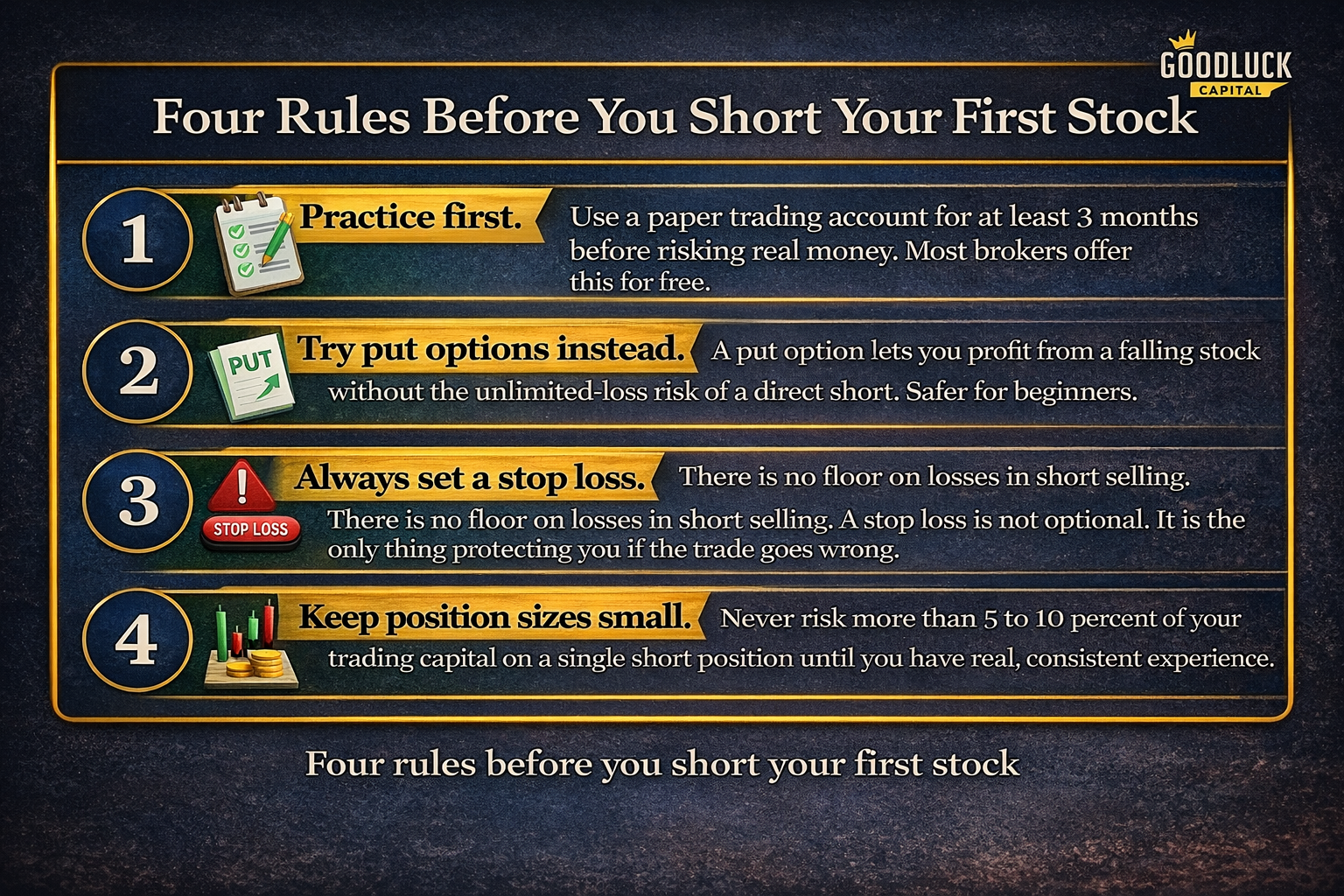
If you want to try it: 4 rules for beginners
One thing most people get wrong: being bearish is not the same as short selling
People confuse these two ideas all the time.
Being bearish means you believe the market will fall. That is a view. A belief. An opinion.
Short selling is a specific trade. A timed bet on a specific stock falling within a specific window.
You can be long-term bullish on the economy and still use short-term short positions to protect your portfolio or profit from corrections.
The best traders are not permanently bullish or permanently bearish. They read what the market is doing right now and act accordingly.
That is not pessimism. That is discipline.
The bottom line: respect it, understand it, use it carefully
Short selling is one of the most powerful tools in the stock market.
It is also one of the most dangerous if you do not know what you are doing.
The risks are real. Losses are unlimited in theory. Squeezes happen fast. Borrowing costs add up.
But the knowledge is valuable for every investor. Even if you never short a single stock, understanding how it works will make you a sharper, calmer, better-informed investor.
You will know why stocks sometimes collapse faster than they should. You will know what is happening when you hear the words 'short squeeze.' And you will know not to panic when someone on social media brags about making money in a falling market.
Now you know how they did it.