Introduction
On April 30, 2026, Apple made one announcement.
The stock jumped 3.4% the same day.
Not a new iPhone. Not an AI product. Just a $100 billion stock buyback.
Most people heard the news. Very few understood what it actually means for their money. This article will change that.
For investors looking for better US trading and investment advice, understanding stock buybacks is important because they can significantly impact long-term returns, earnings growth, and stock valuations.
What is a stock buyback?
A buyback is when a company uses its own cash to buy its own shares from the stock market. Once bought, those shares are cancelled. They no longer exist.
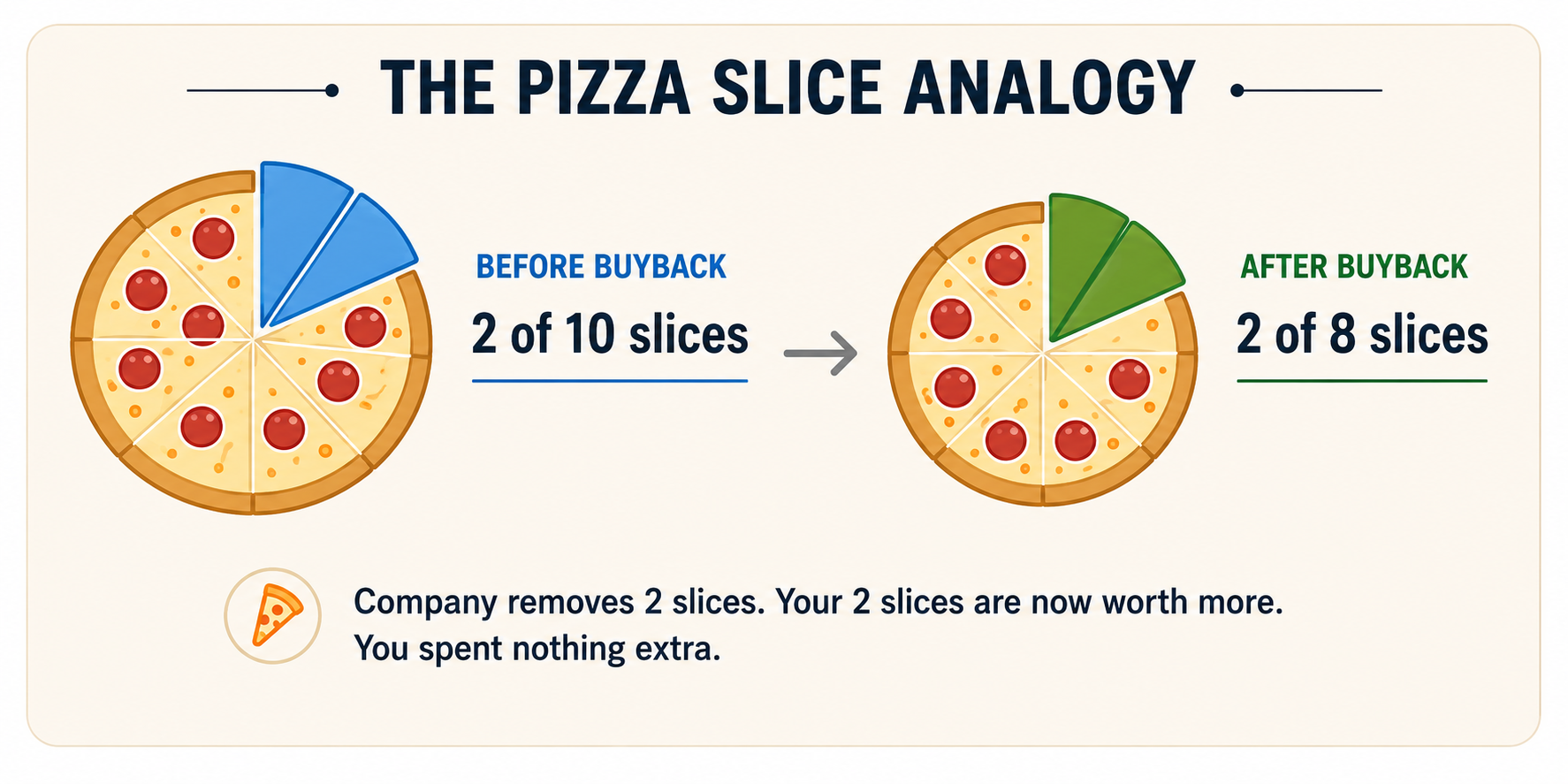
This leaves fewer shares in the market. Every remaining shareholder automatically owns a bigger piece of the company without spending a single extra dollar.
Here is the easiest way to picture it.
How does it actually work?
Three steps of a buyback
1. Board approves it
Apple's board approved a $100 billion repurchase on April 30, 2026. This is an authorisation. They can spend up to that amount buying back shares over time.
2. Company buys shares on the open market
Apple goes into the stock market just like any investor. It buys its own shares gradually over weeks or months.
3. Shares are cancelled
The bought shares are retired and disappear from the market. The total number of Apple shares goes down.
Why did Apple do a $100 billion buyback?
Apple announced this alongside very strong Q2 2026 results.
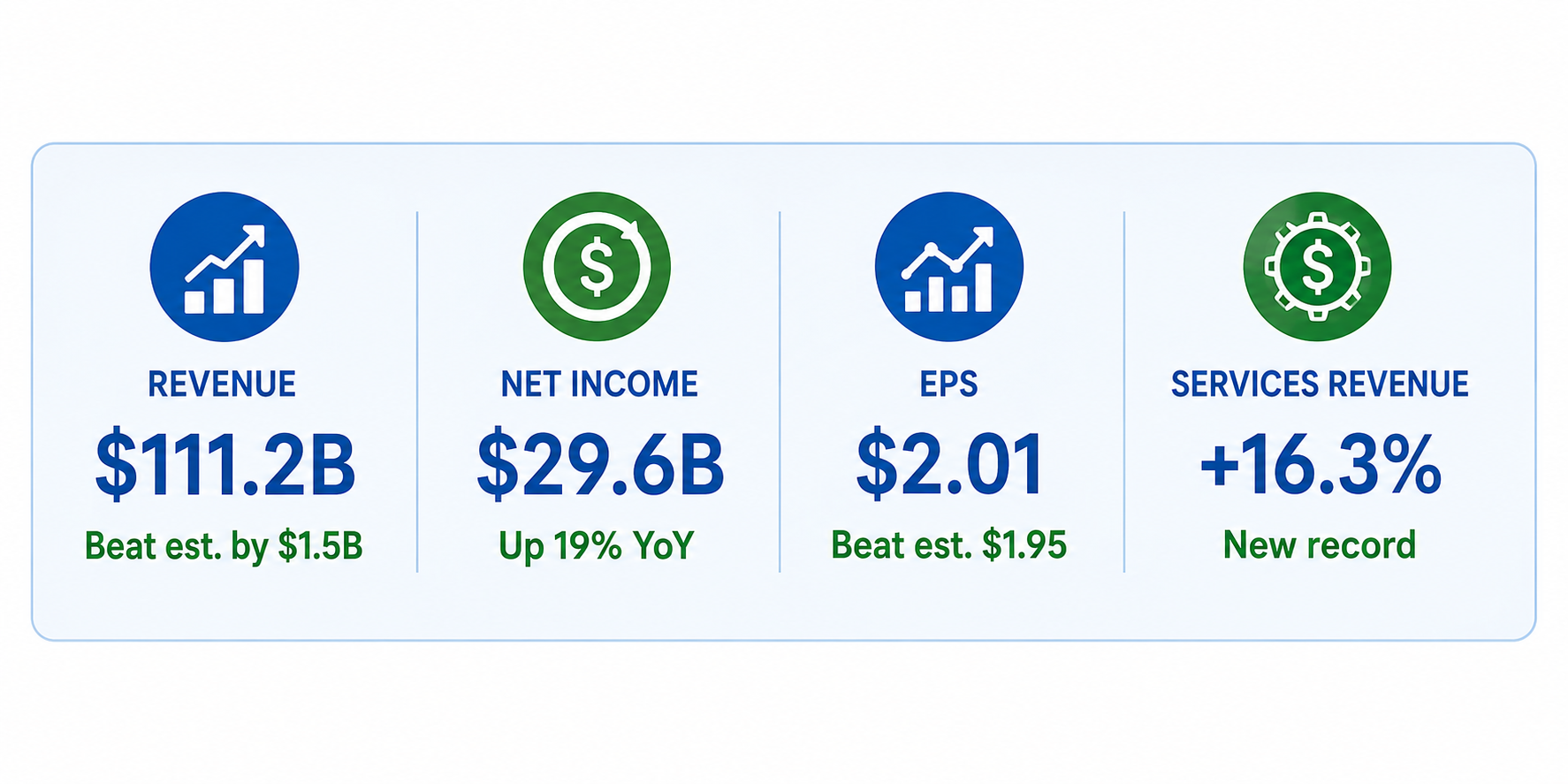
The buyback is Apple saying one thing clearly. We make so much cash that we can return $100 billion to shareholders and still have plenty left over.
Since 2012, Apple has spent over $840 billion buying back its own shares. That is the largest share repurchase programme in corporate history.
Does a buyback push the stock price up?
Usually yes. Three reasons explain why.
First, earnings per share goes up. When fewer shares exist, the company's profits are shared among fewer owners. Each share gets a bigger slice. Apple's EPS grew 22% this quarter while revenue grew 17%. That 5% difference came largely from buybacks reducing the share count over years.
Second, it signals confidence. When a company spends $100 billion buying its own stock, it is telling the market one thing. We believe our shares are worth more than the current price. Markets respond positively to that signal.
Third, supply falls. Fewer shares available in the market with the same level of demand means prices go up. Simple supply and demand.
One honest note. A buyback does not fix a bad business. Apple's buyback is backed by $29.6 billion in net income in a single quarter. That is what makes it credible.
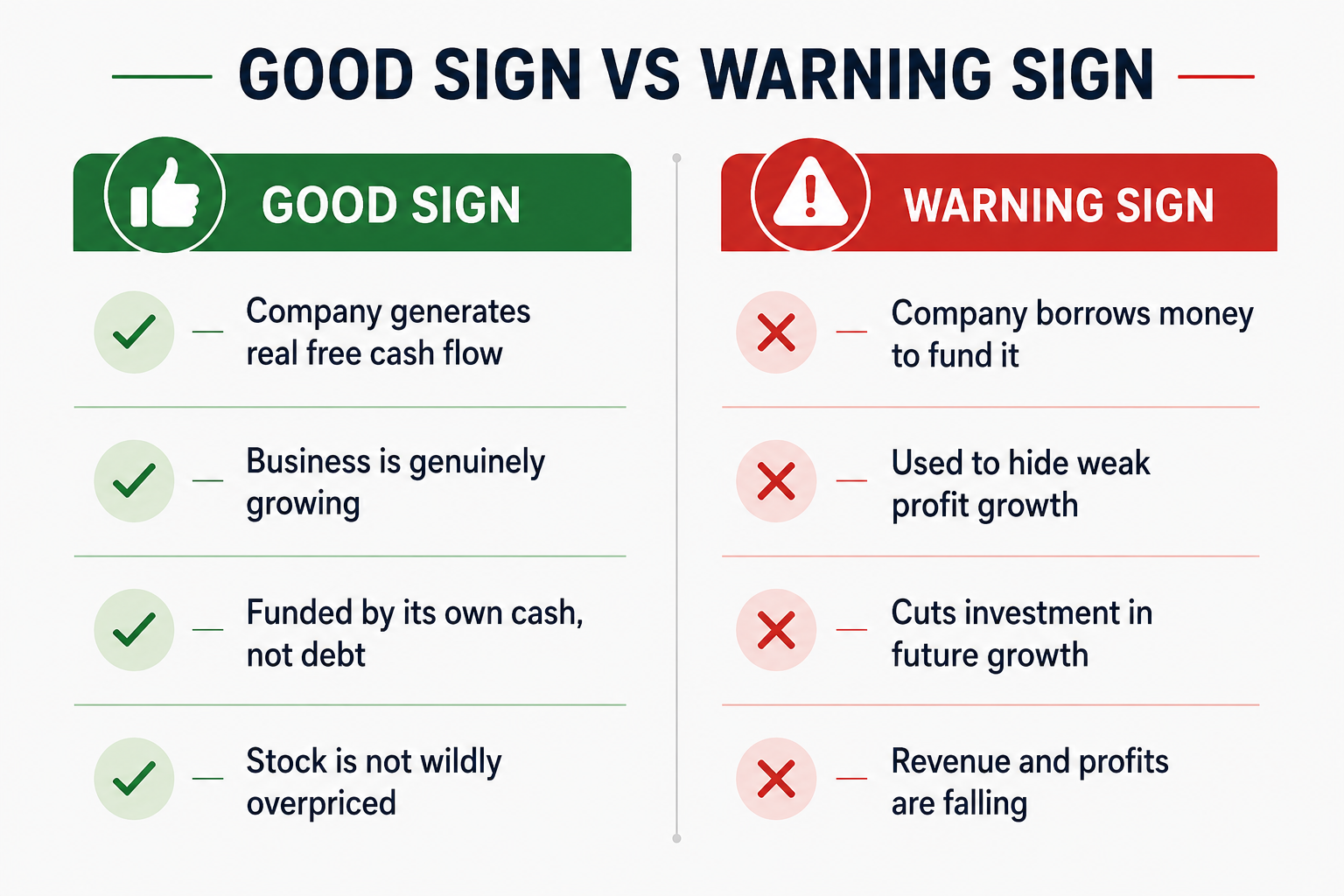
Is a buyback always good news?
It depends on how the company is doing it.
Buyback vs dividend: what is the difference?
Apple also raised its dividend by 4% to $0.27 per share per quarter alongside the buyback. So what is the difference between the two?
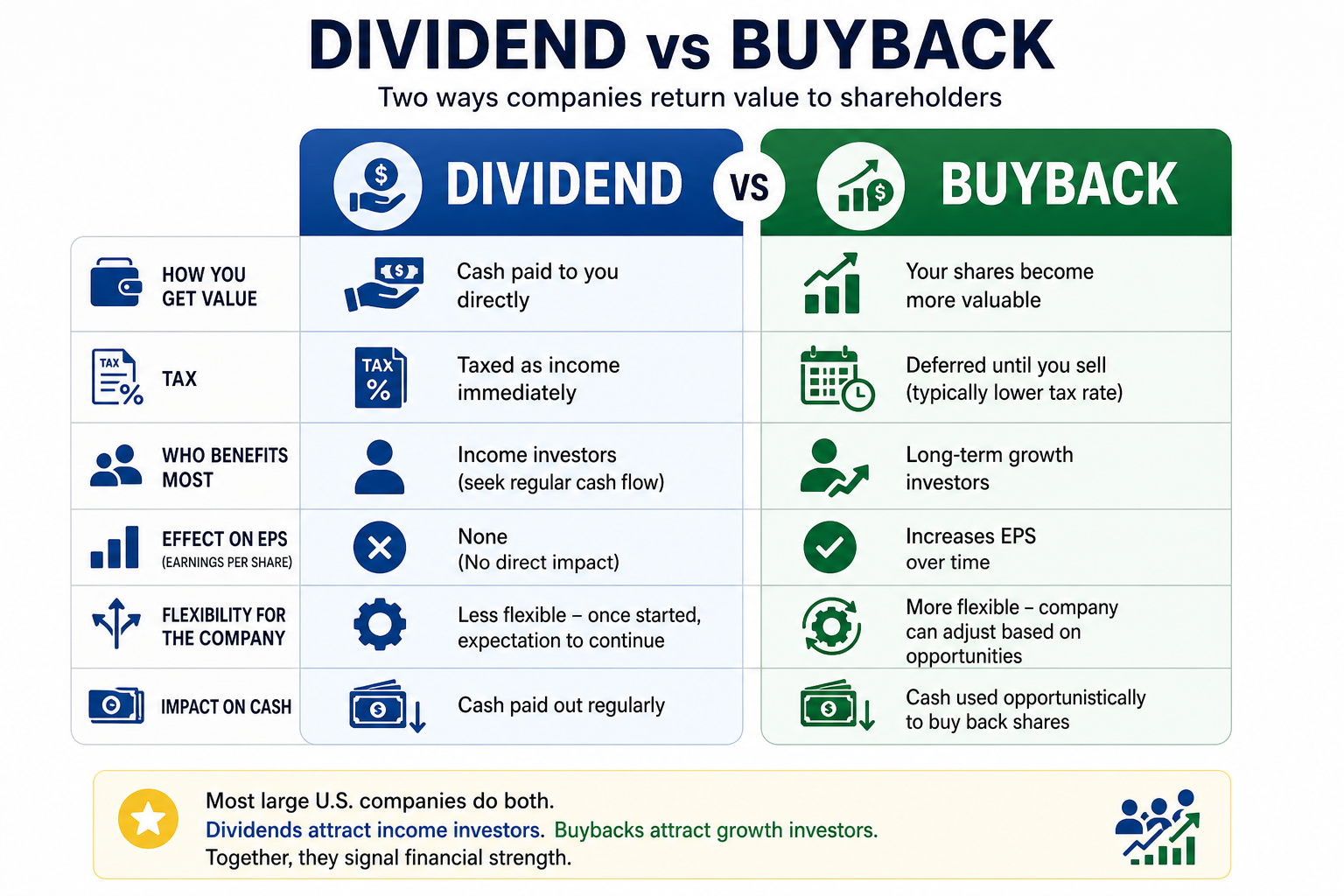
Most large companies do both. Dividends attract income investors. Buybacks attract long-term growth investors. Together they signal that the company is financially strong.
For traders following positional trading advisory in USA stocks, companies that consistently combine earnings growth, dividends, and buybacks often become strong long-term compounders.
Conclusion: three questions to ask every time
A buyback at its core is a company saying one thing. The best investment we can make right now is in ourselves.
Apple's $100 billion buyback is backed by $111.2 billion in revenue, $29.6 billion in net income, and over $100 billion in annual free cash flow. That is why the market celebrated it with a 3.4% jump.
Not every buyback deserves that reaction.
Next time you see a buyback headline, ask these three questions
- Is the company generating real cash?
- Is the business actually growing?
- Is this funded by earnings or by debt?
Those three questions will give you the answer every time.