Introduction
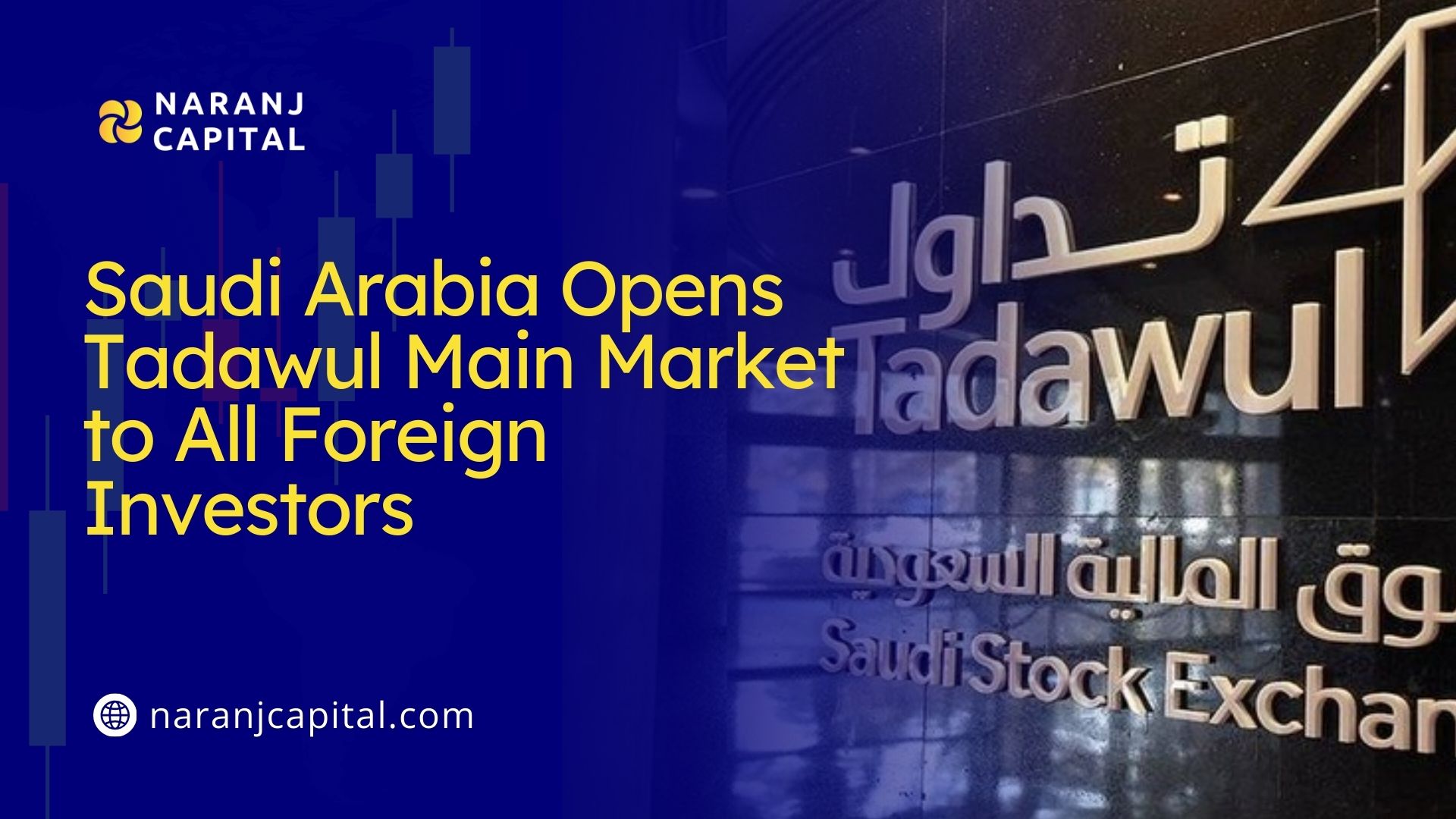
February 1, 2026 marks a historic day for Saudi Arabia's capital markets. Starting today, the Kingdom has thrown open the doors of Tadawul—the Saudi Stock Exchange—to all foreign investors, eliminating decades-old restrictions that kept most international money on the sidelines.
This isn't just another regulatory update. It's a fundamental shift in how the world can access one of the Middle East's largest and most dynamic equity markets. Here's everything you need to know.
What Just Changed?
Until yesterday, if you wanted to invest directly in Saudi stocks, you faced some serious hurdles. The old system required foreign investors to qualify as "Qualified Foreign Investors" (QFIs)—essentially, you needed at least $500 million in assets under management just to get your foot in the door. Smaller institutions, retail investors, and most international funds were completely locked out.
Others had to use complicated "swap agreements"—synthetic structures that gave you economic exposure to Saudi stocks without actually owning them. It was cumbersome, costly, and frankly, a pain.
Now? All of that is gone.
The Capital Market Authority (CMA) has abolished the QFI regime entirely. Any foreign investor—individual or institutional, big or small—can now open an account with a licensed Saudi broker and buy shares directly on Tadawul's Main Market. No minimum asset requirements. No special qualifications. Just straightforward market access.
Why This Matters: The Numbers Tell the Story
Let's put this in perspective. Tadawul isn't some small emerging market exchange. With a market capitalization exceeding $2.5 trillion, it's the largest stock exchange in the Middle East and one of the top 10 globally. It's home to nearly 240 listed companies across 21 sectors—from energy giants like Saudi Aramco to banking powerhouses, petrochemical leaders, and rapidly growing consumer companies.
Yet despite its size, foreign ownership remains remarkably low. As of Q3 2025, overseas investors held around SAR 590 billion (approximately $157 billion) in Saudi equities—sounds big, but it represents just 4.8% of total market capitalization. Compare that to other emerging markets where foreign ownership typically ranges between 15-35%.
That gap? It's about to close—fast.
What Stays the Same
Before you rush in, there's one important caveat: ownership limits haven't changed. Foreign investors still face:
-
Individual cap: No single non-resident foreign investor can own more than 10% of any listed company
-
Aggregate cap: Total foreign ownership across all investors cannot exceed 49% of any company's shares
However—and this is crucial—there are strong signals that even these caps may be lifted soon. The CMA has hinted that removing the 49% ceiling is "almost ready" and could happen later this year. If that happens, we're looking at a complete transformation of the market's accessibility.
The Vision 2030 Connection
This reform doesn't exist in isolation. It's a cornerstone of Saudi Arabia's Vision 2030—Crown Prince Mohammed bin Salman's ambitious plan to diversify the economy away from oil dependence and transform the Kingdom into a global investment hub.
By opening Tadawul, Saudi Arabia is:
- Attracting capital for massive development projects like NEOM and the Red Sea Project
- Competing with regional rivals like the UAE (which attracted record FDI in 2024)
- Deepening market liquidity to make stock prices more efficient and stable
- Boosting global credibility as a serious financial center
The timing is strategic. Saudi Arabia earned a sovereign credit upgrade to A+ (stable) in 2025, and now it's removing the final barriers to capital inflows.
Who Benefits Most?
For Foreign Investors:
This is your chance to access a market that was previously restricted. Whether you're:
- A global asset manager looking to diversify into emerging markets
- A regional investor seeking exposure to Gulf economies
- An individual retail investor attracted to high-growth stories
You can now participate directly. Sectors like energy transition, infrastructure, banking growth, and domestic consumption are particularly attractive.
For Saudi Companies:
Broader foreign access means:
- Deeper liquidity in stocks, making it easier to raise capital
- Higher valuations as international demand increases
- Lower cost of capital for expansion and growth
- Greater scrutiny on disclosure and governance (which is actually positive long-term)
Blue-chip stocks—large banks, petrochemical companies, telecom giants, and index heavyweights—are likely to see the most immediate impact.
For the Market:
Historically, when emerging markets open to foreign investors, they experience 20-30% increases in foreign participation within the first year. Saudi Arabia's earlier inclusion in MSCI and FTSE indices drove billions in inflows. This latest reform could unlock significantly more.
The Index Factor: Why This Could Attract Billions
Here's where things get really interesting. Saudi Arabia is already part of major global indices—MSCI Emerging Markets, FTSE Emerging Markets, and S&P Emerging Markets. But its weight in these indices is constrained by those foreign ownership limits.
If (or when) the 49% cap is removed, Saudi stocks could see their index weights increase substantially. That means passive funds tracking these indices would be required to buy more Saudi stocks to match the index. We're talking tens of billions of dollars in potential inflows.
When Saudi Arabia joined MSCI Emerging Markets in 2018-2019, analysts estimated it would attract $4-5 billion in passive flows. Removing ownership caps could trigger similar or larger amounts.
What You Need to Know Before Investing
While access is now open, you still need to:
- Open an account with a Saudi-licensed broker or custodian
- procedures and compliance checks
- Understand tax implications in your home country
- Monitor ownership limits on specific stocks (some may already be near the 49% cap)
- Watch for operational details as brokers and custodians adjust to the new rules
As participation grows, demand for credible Saudi Tadawul stock trading advice will increase—particularly around blue-chip names nearing ownership caps.
Global platforms like Interactive Brokers have already announced Saudi market access, easing operational barriers.
The Bigger Picture: What Comes Next
The market has already reacted positively. Saudi stocks jumped nearly 3% on the first trading day after the announcement, with financials leading the rally. The Tadawul All-Share Index (TASI) had already risen about 10% since the reform was first announced in September 2025.
But this is just the beginning. Watch for:
- Further liberalization of the 49% ownership cap
- New product launches like Saudi Depositary Receipts (SDRs), which allow foreign companies to list in Riyadh
- Increased institutional participation as large global funds complete operational set-up
- Enhanced corporate governance as companies adapt to international investor expectations
The Bottom Line
Saudi Arabia opening Tadawul to all foreign investors is a watershed moment for the Kingdom's capital markets. It removes structural barriers that have kept international capital away for years, aligning Saudi Arabia with global best practices and positioning it as a serious contender for emerging market allocations.
For investors, this represents early access to a market undergoing rapid transformation. In such an environment, disciplined positioning and well-researched prime trade advice for Saudi Tadawul can help navigate volatility while capturing long-term growth.
The door is now open. The question is: will you walk through it?