Introduction
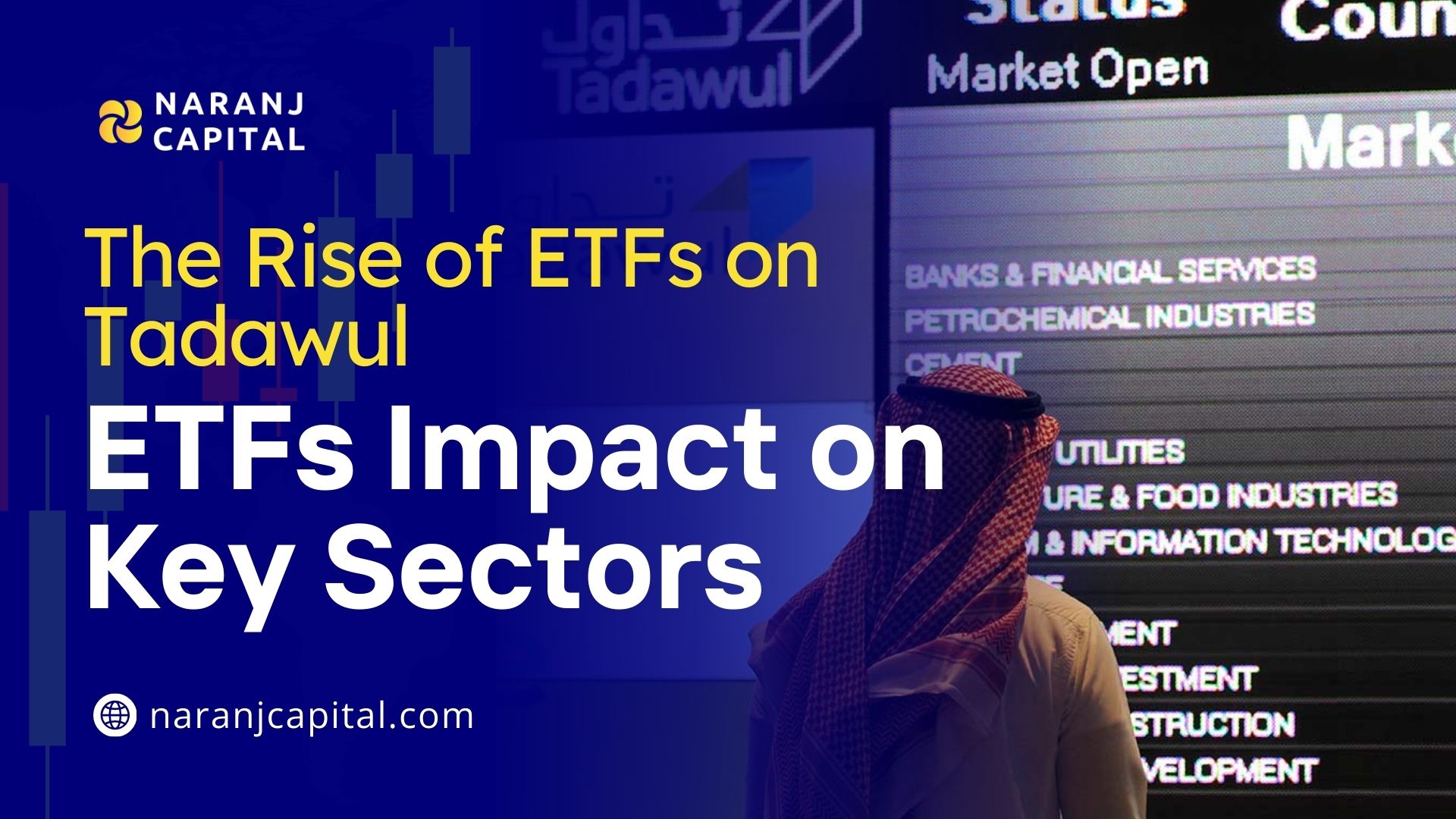
Saudi Arabia's stock market, the Tadawul, is no longer just a playground for heavyweight oil companies and banking giants. A quiet revolution is underway — and exchange-traded funds (ETFs) are at the heart of it. With ETF assets under management (AUM) on Tadawul surging nearly fivefold from $410 million in 2022 to over $2 billion by mid-2025, the way capital flows into Saudi Arabia's key sectors — banking, petrochemicals, and the emerging growth economy — is being fundamentally reshaped.
For investors who have long struggled with the binary choice of picking individual stocks on the Kingdom's exchange, ETFs are opening an entirely new chapter. For those seeking Prime trade advice for Saudi Tadawul, understanding how ETF flows influence sector momentum is now essential. Here’s why it matters and what it means for every sector on Tadawul.
From a Niche Product to a Market Force
Just a few years ago, Saudi ETFs were a footnote. The product shelf was thin, liquidity was limited, and investor awareness was low. Fast forward to today, and the picture has changed dramatically.
As of late 2025, Tadawul lists over a dozen ETFs — covering everything from sovereign sukuk and gold to US tech stocks, petrochemicals, ESG themes, and small-cap Saudi growth companies. Saudi Arabia now commands roughly $2 billion of the GCC's total $2.5 billion ETF market, making it the undisputed regional leader. Albilad Capital alone manages about SAR 6 billion in ETF assets, representing 64% of Saudi ETFs and 52% of all GCC-listed ETFs.
The Public Investment Fund (PIF) has been a catalyst. In October 2025, PIF participated as an anchor investor in the Albilad MSCI Saudi Equity ETF — the first broad-based, Shariah-compliant equity ETF on Tadawul, covering over 250 stocks across both the main and parallel (Nomu) markets. That endorsement sent a powerful signal: the Kingdom's sovereign wealth fund believes in ETFs as a core building block for the Saudi capital market.
The Market Making Game-Changer
One of the biggest structural upgrades came in February 2026, when Tadawul officially launched its ETF Market Making Framework. This was not a minor tweak — it fundamentally changed how ETFs trade on the exchange.
Under this framework, designated market makers are now obligated to provide continuous buy and sell quotes for all listed ETFs throughout the trading session. The rules are clear: maximum bid-ask spreads, minimum order sizes of SAR 50,000, and a presence requirement of at least 80% of the continuous trading session. In return, compliant market makers receive a 100% exemption from trading fees.
Why does this matter? Before the framework, many Saudi ETFs suffered from wide bid-ask spreads and thin order books, which discouraged institutional investors. Now, tighter spreads and deeper liquidity make ETFs viable for larger allocations — exactly the kind of upgrade needed to attract the flood of foreign capital heading Saudi Arabia's way.
Foreign Capital and the February 2026 Opening
The timing of the ETF infrastructure overhaul is no coincidence. On February 1, 2026, Saudi Arabia opened Tadawul's main market to all categories of foreign investors — scrapping the old "qualified foreign investor" requirement entirely. Non-resident investors can now buy and hold Saudi shares directly, with full ownership rights.
By the end of Q3 2025, international investors already owned over SAR 590 billion ($157.3 billion) worth of Saudi equities. The CMA expects this figure to climb significantly as the new framework draws additional institutional and individual investors from around the globe.
For foreign investors unfamiliar with individual Saudi stocks, ETFs provide the easiest on-ramp. Rather than researching 250+ listed companies, an investor can gain instant, diversified exposure through a single ETF trade. This dynamic is poised to redirect massive capital flows across Tadawul's key sectors.
How ETFs Are Reshaping Flows Into Banks
Saudi banks — Al Rajhi Bank, Saudi National Bank (SNB), Riyad Bank, and others — have historically dominated Tadawul's trading volumes. In any broad-market Saudi ETF, banks carry outsized weightings. For instance, Al Rajhi Bank is the single largest constituent of the MSCI Tadawul 30 index, with a weighting of approximately 15.28%, followed by SNB and other major lenders.
What ETFs change is the nature of flow into bank stocks. Instead of active stock-pickers driving price discovery, a growing share of capital now arrives passively — tracking an index, buying all banks in proportion, regardless of near-term earnings surprises or rate-cut expectations. As the banking sector continues to benefit from Saudi Arabia's non-oil economic expansion and mortgage-led credit growth, ETF inflows provide a steady, structural bid underneath bank stocks.
This has an important implication: bank stocks may become less volatile on earnings misses, because passive ETF flows are indifferent to quarterly noise. At the same time, relative performance differentiation between individual banks could diminish, since the ETF buyer does not distinguish between an Al Rajhi and a Bank AlJazira — it owns them all.
Petrochemicals: A Sector-Specific ETF Play
Petrochemicals represent one of Saudi Arabia's core legacy industries, home to giants like SABIC, and closely tied to global commodity cycles and oil prices. For years, investing in this sector meant picking individual names and timing commodity swings.
The Yaqeen Petrochemical ETF (ticker: 9401) changed that equation. As a sector-specific fund, it offers concentrated exposure to a basket of Saudi petrochemical companies in a single trade. For investors who believe in a cyclical recovery in global chemicals demand, or who want to play rising SABIC margins, the ETF removes the single-stock risk.
However, it's worth noting that sector ETFs like this one carry relatively modest AUM — around SAR 8.4 million as of September 2025 — reflecting investor caution toward a sector that remains highly cyclical. As the ETF market making framework improves liquidity, and as global petrochemical demand cycles turn, flows into this sector ETF could accelerate meaningfully.
The Vision 2030 Growth Story: Where the Real Shift Is Happening\
Perhaps the most exciting development is how ETFs are channeling capital into Saudi Arabia's new growth economy — the sectors being built under Vision 2030.
The Albilad MSCI Saudi Growth ETF (ticker: 9408) is the clearest expression of this theme. Unlike broad-market ETFs that remain heavily tilted toward Aramco, banks, and petrochemicals, this fund tracks small- and mid-cap (SMID) companies aligned with the Kingdom's diversification agenda. Think healthcare providers, fintech startups, logistics firms, consumer brands, and tech services — companies riding the wave of a young, urbanizing population where nearly two-thirds of Saudis are under 30.
PIF's broader strategy reinforces this shift. The sovereign fund is deploying over $1 trillion across 13 strategic sectors — from renewable energy and electric vehicles (via Lucid Motors) to gaming (through Savvy Games Group) and tourism mega-projects. Many of the companies benefiting from this spending are smaller, listed on Nomu, or recently IPO'd — exactly the kind of stocks that growth-oriented ETFs capture.
The challenge? SMID-cap stocks are inherently more volatile and less liquid. The Albilad Growth ETF saw a year-to-date return decline of 18.68% at one point in 2025, reflecting the higher beta of its holdings. But for long-term investors with a multi-year horizon aligned to Vision 2030, this ETF provides diversified exposure to Saudi Arabia's economic future in a way no single stock can.
The Bigger Picture: A Structural Transformation
Tadawul's market capitalization surged 463% from roughly $483 billion at year-end 2014 to approximately $2.7 trillion by December 2024. Even excluding Saudi Aramco's $1.8 trillion valuation, the exchange grew by $427 billion over the same period. The Saudi government's target is to push the asset management industry's AUM to 40% of GDP by 2030, up from 26% in 2024.
ETFs are central to hitting that target. They lower the barrier for retail investors, provide institutional-grade tools for foreign allocators, and create transparent, rules-based products that regulators can monitor easily.
| ETF Name | Ticker | Focus | AUM (Sep 2025) |
|---|---|---|---|
| FALCOM Financial Services ETF | 9400 | Top 30 Saudi equities | ~SAR 37.8m |
| Yaqeen Petrochemical ETF | 9401 | Petrochemical sector | ~SAR 8.4m |
| HSBC Amanah Saudi 20 ETF | 9402 | Quant/top 20 strategy | ~SAR 380.8m |
| Albilad Saudi Sovereign Sukuk ETF | 9403 | Saudi government sukuk | Large |
| Albilad MSCI Saudi Growth ETF | 9408 | SMID-cap Vision 2030 | ~SAR 13.6m |
| Albilad MSCI Saudi Equity ETF | 9412 | Broad market (250+ stocks) | SAR 316m (IPO) |
What Investors Should Watch
The rise of ETFs on Tadawul is not a short-term trend — it is a structural transformation. As 2026 unfolds, several developments will determine how fast this evolution accelerates:
Foreign inflow surge: With full market access now live, watch for foreign institutional money entering Saudi ETFs as the simplest diversified exposure vehicle.
Market maker impact: The new framework should compress bid-ask spreads and boost daily trading volumes across all listed ETFs, making them more attractive for large-block trades.
New product launches: Expect more sector ETFs, thematic ETFs (AI, renewables, tourism), and fixed-income ETFs as the market matures.
MSCI weight increase: As foreign ownership limits are relaxed, Saudi Arabia's weighting in MSCI Emerging Markets could rise, triggering billions in automatic passive inflows that benefit ETF holders.
Growth vs. value dynamics: The tug-of-war between legacy sectors (banks, petrochemicals) and Vision 2030 growth sectors will play out through ETF flow data — providing a real-time barometer of investor conviction.
Final Takeaway
Saudi Arabia’s ETF ecosystem is still young — but its growth trajectory mirrors the ambition of Vision 2030 itself.
For investors seeking exposure to the Kingdom’s banking giants, petrochemical cyclicals, or emerging growth sectors, ETFs on Tadawul are rapidly becoming the most efficient gateway. And for market participants providing structured Saudi stocks advisory, ETF flow analytics will soon be as important as earnings reports and macro data.
In short: the rise of ETFs is not just adding products to Tadawul — it is redefining how capital moves across Saudi Arabia’s financial markets.