Introduction
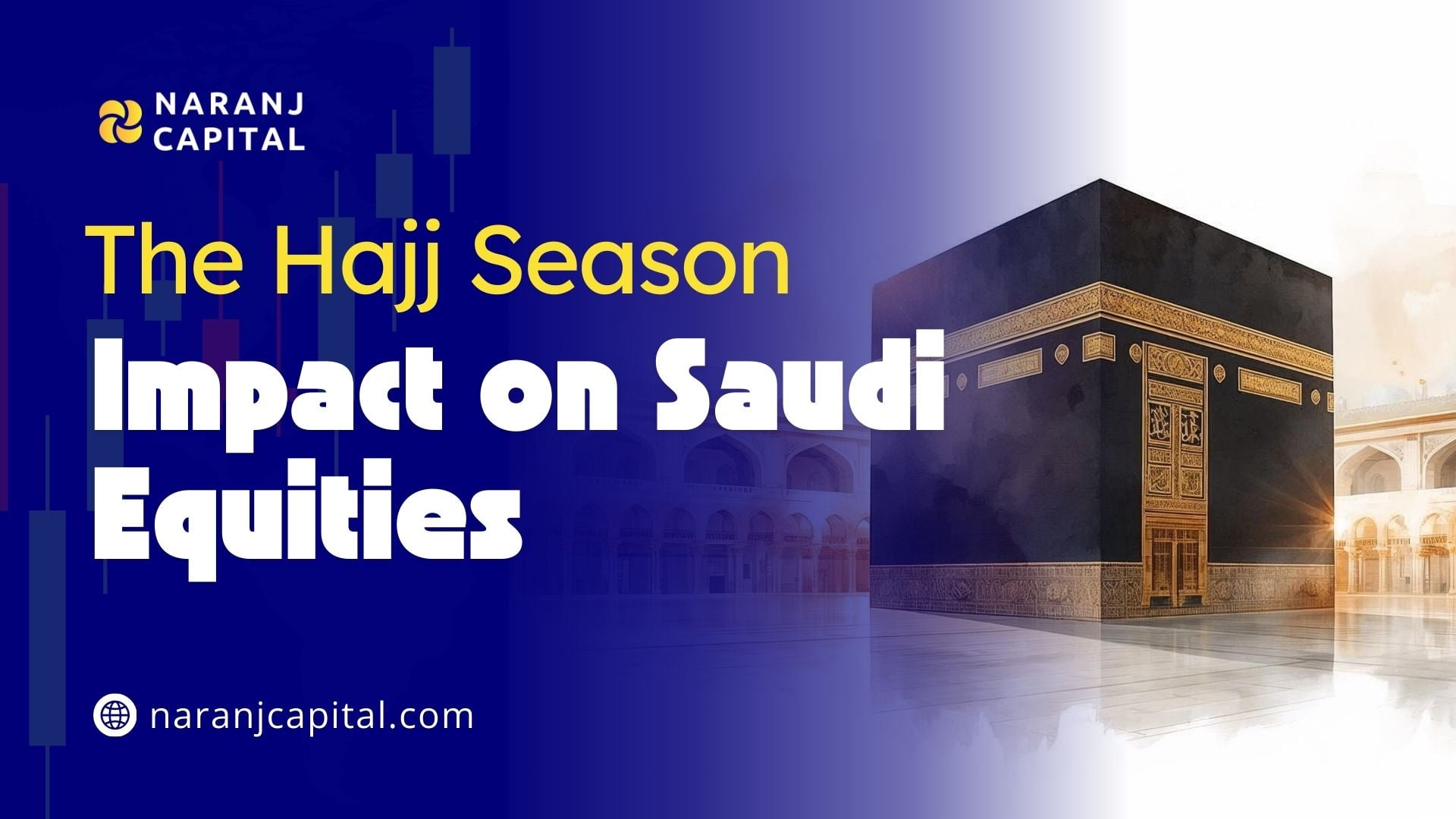
Every year, millions of Muslims travel to Makkah for Hajj, turning Saudi Arabia into the centre of the Islamic world for a few intense weeks. Beyond its huge spiritual significance, Hajj is also an economic event that touches hotels, airlines, retailers – and, indirectly, the Saudi stock market.
This article breaks down how Hajj may influence Saudi market seasonality, what the research says about returns and volatility, and how investors can think about the “Hajj impact” in practice, all in simple language — especially for those seeking practical stock trading advice in Saudi Arabia.
Why Hajj matters for the Saudi economy
Hajj and year‑round Umrah have become one of the most important pillars of Saudi Arabia’s non‑oil economy. Estimates suggest religious tourism contributes around 12 billion dollars a year, roughly 20% of non‑oil GDP and about 7% of total GDP.
This money flows into:
- Hotels, serviced apartments, food and retail in Makkah and Madinah
- Airlines, transport, and logistics
- Construction and infrastructure around the holy cities
Under Vision 2030, Saudi Arabia is actively expanding pilgrim capacity, improving infrastructure, and using Hajj and Umrah as a growth engine, which deepens the economic footprint of the pilgrimage over time.
Calendar anomalies and Islamic events
Global finance literature is full of “calendar anomalies”: patterns like the “January effect”, “Monday effect”, or “Sell in May” that suggest returns behave differently at specific times.
In Islamic markets, researchers have looked at:
- Ramadan effect
- Eid‑ul‑Fitr and Eid‑ul‑Adha effects
- Hajj effect
- Ashoura effect
For the Saudi market (Tadawul), several studies documented lower volatility and sometimes higher returns during Ramadan, often explained by a calmer mood, shorter trading hours, and more risk‑averse behaviour. In contrast, the Hajj period seems to behave differently.
What the research says about the Hajj effect
A dedicated study titled “Seasonality in the Saudi stock market” examined Tadawul All‑Share Index (TASI) and sector indices from 2010–2014 using ARMA–GARCH models. The main findings were:
- The Hajj period had a small, statistically insignificant negative effect on average returns for TASI and most sectors.
- However, there was a significant increase in volatility for TASI and almost all sectors, except retail, agriculture & food, and petrochemicals.
In short: prices did not consistently go up or down around Hajj, but day‑to‑day fluctuations tended to be larger, pointing to higher uncertainty or thinner liquidity.
Another study focused on the Islamic calendar effect in TASI and found that, unlike Ramadan, Hajj did not show strong changes in average returns or trading volumes, and there were no clear volatility spikes when using broader samples. This suggests that Hajj effects might be subtle, sample‑dependent, or concentrated in certain sectors rather than the entire market.
How Hajj might influence market behaviour
Even when statistics are mixed, there are intuitive channels through which Hajj can affect the Saudi market:
1. Investor attention and participation
During Hajj, many local investors and decision‑makers may be on pilgrimage or focused on religious duties, reducing active participation in trading. Lower participation can mean fewer buyers and sellers, which often leads to more volatile price moves when orders hit the market.
For those looking for Saudi Tadawul stocks advice, understanding these liquidity dynamics can be more important than trying to predict direction.
2. Sentiment and religiosity
For a highly religious society, Hajj can shape overall mood and risk appetite. Some investors may trade less, avoid speculative behaviour, or delay big decisions during this period, potentially changing volume and volatility patterns.
3. Sector‑specific demand expectations
- Hospitality, transport, catering, and retail around the holy cities benefit from Hajj‑related spending.
- Infrastructure and construction in Makkah and Madinah may see long‑term support from continued investment under Vision 2030.
Yet, the empirical Hajj study found that sectors like retail and petrochemicals did not experience the same volatility spike as others, suggesting that markets may already price in recurring pilgrimage demand, making it less of a “surprise”.
4. Market closures around Eid al‑Adha
Hajj culminates in Eid al‑Adha, when Tadawul closes for several days. Studies of performance between Eid holidays show that TASI’s level between one Eid al‑Adha and the next can move modestly up or down, driven more by global markets and oil than by the religious holiday itself.
Comparing Hajj and Ramadan effects
To understand the uniqueness of the Hajj effect, it helps to compare it to the Ramadan effect:
-
Ramadan
-
- Often associated with lower volatility and sometimes more favourable returns.
- Trading hours are shorter, and the mood is calmer and more spiritual, which may reduce speculative trading.
-
Hajj
-
- Research finds insignificant return changes, but some evidence of higher volatility in certain samples.
- Rather than a calm environment, Hajj may coincide with reduced participation by a subset of investors, amplifying the impact of orders that are placed.
So, while Ramadan can look like a “quiet” period, Hajj may resemble a “thin‑market, choppy” period in some years and datasets.
Here is a simple comparison:
| Feature | Ramadan effect | Hajj effect (evidence so far) |
|---|---|---|
| Direction of returns | Often slightly positive or steady | Small, insignificant negative bias |
| Volatility | Tends to decline | Tends to rise in some samples |
| Trading activity | Lower, calmer trading | Participation may fall, but volume effects not always significant |
| Main driver | Spiritual mood and shorter hours | Reduced participation and sentiment shifts |
Behavioural angles: herding and mood
More recent work on Islamic events and herding behaviour in Saudi Arabia finds that investor mood around holidays such as Eid‑ul‑Fitr, Eid‑ul‑Adha, and Ashoura can significantly affect how investors herd (follow each other) in the market.
When mood is positive, investors may collectively buy, ignoring fundamentals; when negative, they may sell together. Around Hajj and Eid‑ul‑Adha, this mood channel could interact with thin liquidity to create short bursts of exaggerated moves in some stocks, even if the average return over the period remains small.
Practical takeaways for investors
For traders and long‑term investors looking at the Saudi market, here are a few practical points:
-
Do not expect a reliable “Hajj rally”
Evidence does not support a consistent positive return pattern around Hajj, unlike some narratives around Ramadan. -
Be aware of volatility and liquidity
There is some evidence that volatility can rise during the Hajj period, possibly due to reduced participation. This can mean:
-
- Wider bid–ask spreads
- Larger intraday swings
- Greater impact of big orders
-
Focus on fundamentals for Hajj‑linked sectors
Religious tourism is structurally important and growing as part of Vision 2030. For hotels, travel, and services companies, long‑term value will be driven by:
-
- Capacity expansion
- Pricing power
- Occupancy rates and margins
rather than short‑term Hajj calendar quirks.
-
Watch macro and oil first
Over a full year, oil prices, global risk sentiment, and domestic reforms still explain most of TASI’s direction. The Hajj effect, where present, is a secondary seasonal nuance, not a primary driver.
Final thoughts
The idea of a “Hajj impact” is attractive because Hajj is so central to Saudi life and the economy. Research so far paints a nuanced picture: returns do not show a strong, exploitable pattern, but volatility can increase during the Hajj period in some samples, likely reflecting thinner participation and shifts in sentiment rather than fundamentals.
For serious investors, the Hajj effect is best treated as a context factor, not a trading rule: it can influence short‑term volatility and behaviour, especially in a few sectors, but it does not replace the need for fundamental analysis, risk management, and a clear investment process.